Ship Crew Management
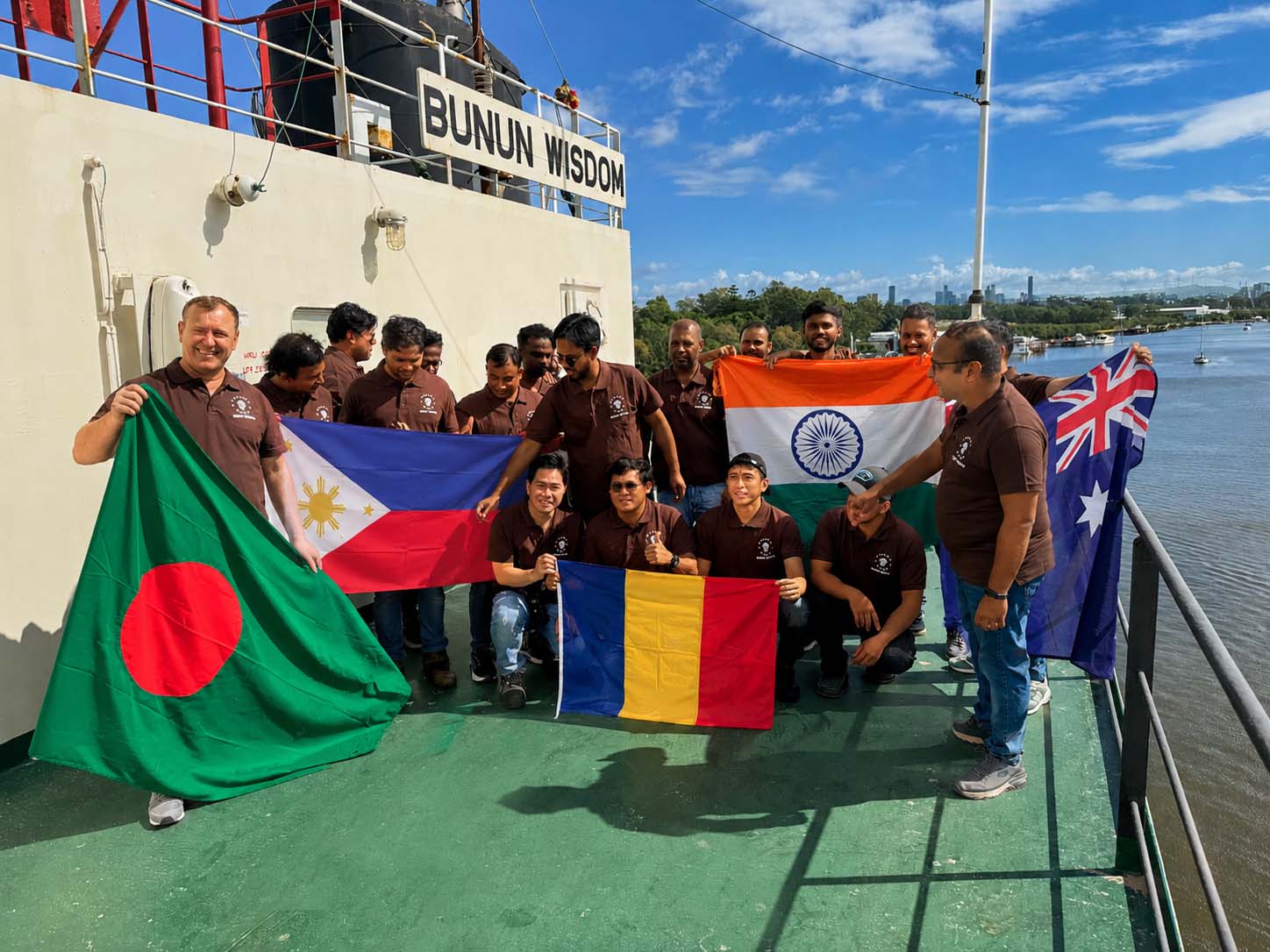
Table of Contents
Why Choose Synergy
Of all the factors that determine whether a vessel performs to its potential, crew quality is the one most directly connected to commercial outcomes and the one least often discussed in those terms.
A vessel’s technical condition determines what she is capable of achieving. The crew determines whether she achieves it. Every fuel-saving initiative, every successful vetting inspection, every safe cargo operation, every well-executed bunkering, every machinery intervention that prevents an off-hire begins not with a system on board but with the judgement of the people operating it. That judgement cannot be specified at the design stage or installed during commissioning. It is developed, deployed and sustained through the quality of the crew management relationship behind it.
The gap between what a vessel is capable of and what it actually delivers in service is, more often than not, a crew gap.
This is the responsibility Synergy Mariners accepts on behalf of every owner it serves. Not the management of crew as a compliance function, but the development and retention of the operational capability through which ship management is actually delivered.
Synergy Mariners is the dedicated crewing, training and seafarer support capability of Synergy Marine Group, the world’s second-largest third-party ship manager. The crew pool it supports numbers 31,400 seafarers from India, the Philippines, Indonesia, Vietnam, Myanmar, China, the European Union, Russia and Ukraine — crewing a fleet of more than 750 vessels across every major commercial segment. The legal entity responsible for crew placement is Synergy Maritime Recruitment Services Pte Limited.
Discuss your crewing requirements — marketing@synergygroup.sg
Commercial Performance
Operational Capability as Commercial Performance
The commercial consequences of crew quality are more direct than they are commonly treated.
Vetting outcomes reflect crew conduct and competence as much as technical condition. A vessel that underperforms in a SIRE or CDI inspection because of crew deficiencies faces consequences that extend beyond the inspection itself — charter party implications, off-hire exposure and a reputation with charterers that takes time to recover. The consistency with which a vessel passes vetting is, in large part, a crewing outcome.
CII ratings are shaped by the decisions crews make throughout every voyage — fuel mode management, speed optimisation, auxiliary load reduction, reporting accuracy. A crew that understands the connection between operational decisions and emissions performance will consistently deliver better results than one that does not. Evidence across the managed fleet indicates that well-prepared crews aligned with energy-efficient operating practices can contribute an additional five to ten percent improvement in operational energy performance. At the scale of a commercially active fleet, that is a material and measurable outcome.
Crew continuity carries its own value. A crew that returns to the same vessel carries knowledge of its systems, its maintenance history and its operational characteristics that cannot be reproduced by induction alone. Handover errors, the time required to reach operational efficiency with an unfamiliar vessel and the incident risk associated with the early period of an assignment are all reduced when the crewing model is designed to retain people rather than simply replace them.
Our Crew Management Approach
Not a Crewing Agency
The conventional crew management model provides officers and ratings against a specification, manages certification compliance and organises reliefs. That is the floor of what crew management should do. It is not the ceiling.
The model Synergy Mariners operates builds operational capability. Recruitment is informed by the specific demands of the vessel type and the owner’s operational priorities, not by availability alone. The preparation a seafarer receives before joining is structured around the vessel they are joining — its propulsion system, its trading pattern, its owner requirements and the regulatory environment it operates in. Performance during an assignment informs the development path that follows it.
This integration is possible because the organisation combines crew placement with one of the most extensive maritime training infrastructures within any third-party ship management group. Five dedicated training centres — three in India, one in Myanmar and one in the Philippines, with a further centre established in Jakarta as the Group’s Indonesian operational presence grows — support more than 7,000 officer and engineer certifications annually and have run more than 390 simulator courses and 203 classroom courses in a single year. This is not a training function managed alongside crew operations. It is integrated into them.
Crew Training & Readiness
Prepared for the Vessel They Join
The demands placed on crew are changing faster than at any point in the industry’s recent history.
Dual fuel propulsion, LNG and methanol operations, cyber security obligations, emissions monitoring, EU ETS reporting and the evolving certification frameworks governing seafarer competence all add technical requirements that a crew must meet before stepping on board. A ship manager that treats these as supplementary additions to a conventional crewing model will find itself managing the gap between what its crew know and what the vessels they are joining require.
The team prepares crew for the vessel they are joining, not for a generic standard. The Marine Advanced Simulation and Training facility, established as a joint venture with MOL and holding ISO 9001:2015 certification with Class NK and DNV-approved courses, provides simulator-based training across bridge operations, engine room procedures, liquid cargo handling, LNG dual fuel operations and ECDIS familiarisation. Command orientation for Chief Officers is assessed by both technical evaluators and psychometrists, with holistic evaluations informing career development decisions. Seaverse, the Group’s digital learning platform, extends training access on board and ashore — covering operational, safety and compliance topics across multiple languages including Bahasa Indonesian, supporting the Group’s growing Indonesian seafarer base.
The 98 percent crew retention rate across the dual fuel fleet is the most direct evidence of what this preparation produces. Retention at that level does not come from training programmes alone. It comes from the combination of competence, operational confidence and management support that makes seafarers want to return to the vessels they have served on.
As the fleet continues to evolve toward methanol, ammonia and the fuel configurations that will follow, crew readiness is developed in parallel. No vessel in the Synergy fleet enters a new fuel regime with crew encountering its demands for the first time.
Crew Welfare & Support
What Support Actually Looks Like
Crew welfare is sometimes discussed as though it were separate from operational performance. The evidence across the managed fleet suggests otherwise.
A seafarer who is well-supported during an assignment — through accessible family communications, responsive shore team engagement, transparent payroll management and a career development framework that is followed rather than stated — performs differently from one who is not. The consistency and reliability that ship management requires is built on stability, and stability is built on the quality of the management relationship a seafarer experiences.
The organisation supports seafarers throughout each assignment through multilingual engagement, emergency and escalation handling and a hands-on relationship team covering not only the seafarer but their family. Union and CBA negotiations are managed within the same framework — ensuring that the formal agreements governing employment are reflected in the day-to-day reality of life on board.
Performance & Accountability
Accountable by Design
The conventional crew management fee is a fixed monthly charge with limited visible connection to what the owner is paying for. An alternative is available for owners who want commercial accountability to be measurable.
A component of the crew management fee can be linked to KPI achievement — covering STCW and flag certification compliance, senior officer planning and availability, timely crew relief, retention rates and MLC compliance. Owners who want a management relationship in which performance is visible in the contract, not only in the annual conversation, can structure their arrangement accordingly.
This approach has been recognised externally through consecutive industry awards for crewing excellence and seafarer employment practices, including three consecutive national awards from India’s maritime community.
Modern ships are becoming increasingly sophisticated. Their systems are more capable, their monitoring more continuous and their regulatory requirements more complex than at any previous point in the industry’s history.
Their success will continue to depend on something far less complex.
The quality, judgement and commitment of the people who operate them.
That is the responsibility Synergy Mariners accepts on behalf of every owner it serves.
Contact Synergy Mariners: marketing@synergygroup.sg
FAQs
Frequently Asked Questions
What is Synergy Mariners?
Synergy Mariners is the dedicated crewing, training and seafarer support capability of Synergy Marine Group — developing and retaining the operational capability through which ship management is delivered. It supports a crew pool of 31,400 seafarers across nine nationalities through an integrated model connecting recruitment, training, deployment, welfare and performance management.
How large is the Synergy crew pool?
31,400 seafarers from India, the Philippines, Indonesia, Vietnam, Myanmar, China, the European Union, Russia and Ukraine — crewing a fleet of more than 730 vessels across every major commercial segment.
What is the connection between crew quality and vessel performance?
Evidence across the managed fleet indicates that well-prepared crews aligned with energy-efficient operating practices can contribute an additional five to ten percent improvement in operational energy performance. Crew quality also directly influences vetting outcomes, CII ratings, off-hire risk and charter acceptance — making it one of the most commercially consequential aspects of ship management.
How does Synergy approach crew training?
Through five dedicated training centres and the Marine Advanced Simulation and Training facility, operating jointly with MOL, with ISO 9001:2015 certification and DNV and Class NK approved courses. More than 7,000 officers and engineers are certified annually. Seaverse, the Group’s digital learning platform, extends training access on board and ashore across multiple languages.
Can Synergy provide crew for dual fuel and alternative fuel vessels?
Yes. Crew preparation for LNG dual fuel, methanol and other alternatively fuelled vessels is integrated into the standard model. The 98 percent crew retention rate across the dual fuel fleet reflects the quality of that preparation and the management approach that sustains it.
What is the KPI-linked pricing model?
A component of the crew management fee can be linked to KPI achievement across certification compliance, senior officer availability, timely relief and retention rates — giving owners a commercial relationship in which management accountability is measurable.
How does Synergy approach crew welfare?
As a standard operational obligation — through multilingual support, accessible family communications, responsive shore team engagement, transparent payroll management and a relationship team covering seafarers and their families throughout each assignment.