

Dual Fuel Vessel Management: Advancing Maritime Decarbonisation
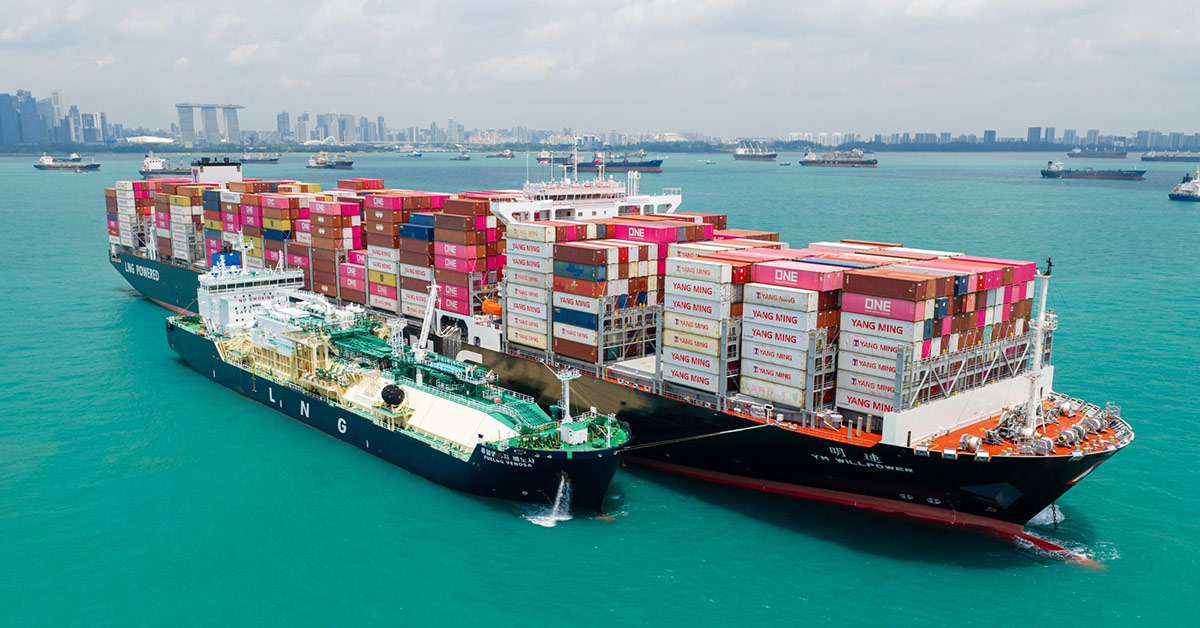
Table of Contents
Technical Ship Management for LNG and Alternative Fuel Vessels
Shipping is changing. Regulation is tightening. Fuel systems are evolving. Yet one constant remains, vessels must operate safely, reliably and predictably every day.
Dual fuel vessels offer shipowners flexibility in meeting environmental requirements while maintaining commercial resilience. But fuel flexibility alone does not guarantee operational success. It must be supported by disciplined ship management, crew readiness and structured technical oversight.
Synergy Marine Group provides technical ship management for LNG and dual fuel vessels across container, tanker and bulk segments, supporting owners as they transition to more complex propulsion systems.
Managing Methanol and LNG Dual-Fuel Container Vessels in Active Service
Synergy Marine Group provides technical management for MAERSK FINISTERRE. MAERSK FINISTERRE is equipped with a methanol dual-fuel propulsion system designed to operate on conventional marine fuels as well as methanol sourced from certified pathways. The safe and reliable execution of methanol operations requires structured fuel handling procedures, enhanced crew familiarisation and disciplined technical oversight.
Methanol introduces different storage, material compatibility and safety considerations compared to LNG. Its successful adoption depends not only on design capability, but on consistent operational governance.
In addition, the Synergy is responsible for the technical management of “YM WILLPOWER” and “YM WORTHINESS”, two 15,500 TEU LNG dual-fuel container vessels owned by Yang Ming Marine Transport Corporation.
Built by Hyundai Heavy Industries in Ulsan, South Korea, these vessels operate within international liner networks connecting Asia and the Mediterranean. They are equipped with high-pressure LNG dual-fuel propulsion systems, enabling operation on liquefied natural gas alongside conventional marine fuels.
As these vessels entered service, the priority was clear: safe integration into commercial operations without compromising reliability.
Under Synergy’s ship management framework, the vessels are supported through:
- LNG-trained ship staff
- Structured fuel gas system oversight
- Controlled bunkering procedures
- Performance and emissions monitoring
- Lifecycle maintenance planning
Alternative fuel vessels must perform to the same commercial standards as any other asset. That consistency defines effective ship management.
Technical Management Beyond Fuel Switching
Dual fuel systems introduce additional engineering layers, gas supply systems, cryogenic storage, automation architecture and safety redundancies.
Managing these vessels requires:
Fuel System Discipline
Oversight of LNG supply systems, vaporizers, boil-off gas compressors and safety interlocks.
Lifecycle Engineering Support
From newbuild specification review and gas trials to stabilisation during early operational phases.
Operational Continuity
Maintenance planning that recognises the criticality of fuel mode flexibility and system redundancy.
These requirements sit within Synergy’s broader ship management structure, ensuring that alternative fuel operations are not isolated from routine technical governance.
LNG Bunkering and Port Readiness
By early 2025, Synergy had supported more than 100 LNG bunkering operations globally across the US Gulf, Singapore, Rotterdam, Gothenburg and other supply hubs.
Each bunkering operation requires preparation. Compatibility studies, port coordination and structured supervision reduce risk and protect schedules.
Dual fuel vessel management is measured not only in fuel capability but in the discipline of execution.
Crew Readiness and Competence
Fuel transition places new demands on ship staff. LNG propulsion requires familiarity with gas systems, emergency procedures and regulatory documentation that differ materially from conventional fuel handling.
At Synergy’s Marine Advanced Simulation and Training Centres, crew programmes include:
- LNG bunkering simulations
- Fuel gas supply system operations
- Emergency response drills
- Engine room modelling for dual fuel systems
- Structured competency assessment
Training is reinforced onboard through mentoring and shore-based technical support. The objective is confidence through preparation.
From Newbuild to Mature Operation
Synergy’s experience spans the lifecycle of alternative fuel vessels, including:
- MIRAI — a fully refrigerated LPG carrier capable of transporting LNG, ammonia and VCM
- SG HORIZON — an LNG dual-fuelNewcastlemax bulk carrier delivered from Namura Shipyard
- PACIFIC EMERALD — a dual-fuel Aframax tanker and Singapore’s first oil tanker bunkered via FUELNG BELLINA
- ARCTIC TERN — a dual-fuel chemical tanker
- MONAX and IRON PHOENIX — vessels involved in biofuel and future fuel trials
Each project reinforces the same principle: fuel flexibility must be supported by steady, disciplined ship management.
Supporting the Energy Transition Responsibly
Dual fuel vessels are part of a wider energy transition that includes bio-LNG, methanol and ammonia-ready systems.
Synergy engages with industry bodies including the Society for Gas as a Marine Fuel and participates in collaborative projects focused on future fuel readiness.
Energy transition is not a single milestone. It is a managed progression requiring operational clarity and long-term planning.
Why Shipowners Engage Synergy
Experience Across Vessel Types
Technical management of LNG dual-fuel container vessels, tankers, gas carriers and bulk carriers.
Global Operational Presence
Bunkering operations managed across key fuel supply hubs.
Integrated Ship Management
Technical, crewing, safety and compliance functions delivered within one framework.
Training Infrastructure
Dedicated simulation facilities supporting crew competence.
Shipowners adopt dual fuel technology for flexibility. They engage ship managers for stability.
Discuss Dual Fuel Vessel Management
Managing dual fuel vessels requires preparation, discipline and long-term oversight.
If you are planning newbuild adoption, expanding LNG capability or evaluating alternative fuel options, our team would be pleased to discuss how structured ship management can support safe and reliable operations.
Frequently Asked Questions
What is dual fuel vessel management?
It is the structured technical and operational oversight of ships capable of operating on conventional marine fuels and alternatives such as LNG.
Does Synergy manage LNG container vessels?
Yes. Synergy provides technical management for large LNG dual-fuel container vessels operating within international liner networks.
How does LNG ship management differ from conventional management?
It requires additional fuel system oversight, bunkering discipline, crew certification and emissions compliance processes.
What fuel types can Synergy-managed dual fuel vessels operate on?
Our managed vessels can run on LNG, marine gas oil (MGO), low sulphur fuel oil (LSFO) and in some cases biofuels and ammonia-ready configurations.
Does Synergy support shipowners during newbuild construction?
Most definitely. We provide pre-contract specification reviews, yard supervision and end-to-end project management, including participation in gas trials.
Where has Synergy performed LNG bunkering operations?
In over 10 locations, including Singapore, the US Gulf, Rotterdam, Gothenburg, Malaysia and Jamaica—supporting safe, efficient bunkering operations globally.
How does Synergy train crew for dual fuel operations?
Through classroom and simulation-based training at our in-house centres, with modules tailored to dual fuel engines, LNG systems and emergency response.
What future fuel technologies is Synergy exploring?
Beyond LNG, we are actively involved in projects related to bio-LNG, green methanol and ammonia, supporting shipowners on long-term decarbonisation pathways.
