
Preamble
To say that “change is the only constant” is of course a paradox. The Greek philosopher Heraclitus suggested that the world is in a perpetual state of flux, with nothing remaining static, and the phrase emphasizes the inherent dynamic nature of existence. It highlights that, precisely because things are constantly changing, change, as a concept in itself, remains steady. Change manifests in countless ways, from the natural world (e.g. seasons, weather) to human experiences (e.g. growth, relationships).
Introduction
Powering vessels has had its own set of changes, too, from sails to low sulphur liquid fuel. It took nearly a hundred years to achieve that, and it had a dramatic impact on the cost, speed and efficiency of shipping. But the “energy revolution” that we face today is different from previous changes. It is not driven by technology, but by an environmental imperative, increasingly underscored by regulatory demands to reduce emissions. The world is constantly in search of changes to reduce its dependence on fossil fuels and move towards clean energy sources. One such option that has gained increasing attention in recent years is the use of methanol as a fuel.
Methanol is being considered as one of the potential alternative fuels for shipping, as the sector continues its journey towards decarbonisation. All indications are that the industry sees it as very promising, and as the global order book for methanol-fuelled vessels grows, the focus is shifting from design to day-to-day management. For shipowners, the challenge is no longer just about having the right fuel—it is about selecting a ship manager equipped to operate future-ready fleets.
Methanol has attracted considerable interest as an alternative ship fuel since 2021. Together with the IMO’s International Gas Fuel (IGF) Code for ships using low-flashpoint fuels, and mandatory class rules for methanol-powered ships, the adoption of the IMO interim guidelines for ships using methyl or ethyl alcohol as fuel (MSC.1/Circ.1621) has been an enabler for shipowners ordering methanol-fuelled ships, and the following discussion is just an attempt to explore the current state of methanol as a clean fuel, including its safety considerations, adoption, bunkering infrastructure and technological readiness.

What is methanol?
Methanol is a light, volatile, colourless and flammable alcohol with the chemical formula CH3OH. It is produced from a variety of feedstocks, including steam reforming of natural gas, biomass, and carbon dioxide. In an internal combustion engine, methanol reacts with the oxygen (in the air) and creates carbon dioxide and water, with the release of heat/energy. However, methanol engines require a pilot fuel to initiate combustion:
2CH3OH + 3O2 → 2CO2 + 4H2O
Despite the fact that the CO2 emitted is on the higher side, methanol-fuelled shipping is a viable option to achieve net-zero carbon life cycle emissions if the methanol is produced using biomass or renewably sourced hydrogen and carbon dioxide.

Different types of methanol, coded by colour, are given below.

Black Methanol
Produced using coal as a feedstock, which is considered to be the production pathway with the highest emissions.

Blue Methanol – NG-methanol
Produced from fossil sources (usually coal or gas), but by utilising Carbon Capture and Storage (CCS) the overall CO2 emissions are greatly reduced. However, blue methanol, made using natural gas, does not meet the definition of a zero-carbon fuel.

Green Methanol – Re-methanol, bio-methanol and e-methanol
Sustainable electricity (usually wind or solar) is utilised in its production, emitting the lowest possible CO2. To be considered truly green, the production should be carbon-negative, either by using biomass or Direct Air Capture (DAC) technology.
The most common method for producing renewable methanol is using hydrogen (produced from water electrolysis) and CO2 (from DAC), which are then combined using Methanol Synthesis.
Bio-methanol is typically produced from lignocellulosic feedstocks (biomass), such as agricultural waste and byproducts. E-methanol is typically produced from carbon dioxide (extracted from ambient air using DAC) and green hydrogen
One of the major attractions of methanol as a fuel type is that it has a single molecular structure, hence engines need not be arranged for dual fuel flexibility , and can be more precisely tuned. It is sulphur-free, so there are no SOx emissions. However, the toxicity aspect of methanol, together with its relatively low flashpoint (12°C) requires particular attention during storage, handling and use, and can give rise to material compatibility issues.
Methanol as a cargo is covered under Annex II of the MARPOL Convention. As a marine fuel it falls within the definition of the term fuel oil , as given in regulation 2 of Annex VI to MARPOL, so the relevant requirements of regulation 18 of that Annex are applicable. Since the flashpoint of methanol is below the general use limit of 60°C in Chapter-II-2 of the SOLAS Convention, it is considered within the scope of the IMO s IGF Code. Additionally, in the context of methanol being used as an oil fuel , as per regulation 1 of MARPOL Annex I, suppliers should also provide a Material Safety Data Sheet (MSDS) in accordance with Chapter VI regulation 5-1 of SOLAS. Several ship classification societies have their own rules covering methanol-fuelled ships. Furthermore, as it is a non-standard, low flashpoint marine fuel, port authorities will typically have special requirements associated with the supply of methanol as a fuel. Methanol itself is not new. It is a widely traded commercial product and is safely handled around the world – the only change is that methanol is now being supplied to ships as a fuel. And the fundamental bunkering principles still apply to safely transfer, without spillage, leakage or other hazard, the intended quantity from the supplier to the ship.
Shore terminals are very conversant with the loading or discharge of methanol as a bulk product, just as ship operators are familiar with and well-practised at loading conventional bunkers. Hence, for methanol as a bunker product, the issue is to adapt those existing capabilities, and (to assist ship owners/ship operators and the supply side of that process) several dedicated bunkering checklists have been developed by classification societies, and these have been made available to all stakeholders.
Advantages
- There are no sulphur oxide emissions, and very low levels of particulate matter are emitted from methanol combustion.
- Methanol is a liquid at ambient temperatures and pressures, and therefore does not need to be pressurised, compressed or stored cryogenically.
- Methanol is highly soluble and miscible in water, so in the event of a spill the fuel will rapidly dissolve in seawater.
- The energy density of methanol is broadly like ammonia and higher than hydrogen, making onboard storage economically feasible, albeit that it is not as compact as the heavy fuel oil (HFO) used today.
- Current high availability due to industrial use (except green methanol, though).
- Regulations and market maturity
Disadvantages
- Carbon dioxide emissions – tank to wake emissions are only marginally lower than fossil fuels, but it is considered that these can be offset by means of a carbon-negative supply chain.
- Safety considerations: methanol is highly toxic, flammable and corrosive, so stringent safety measures are needed. Methanol requires specific storage/ handling arrangements and appropriately constructed and coated storage tanks.
- Low flashpoint, and toxicity so enhanced safety systems are needed.
- Lower energy density compared to fuel oil.
- Production of green methanol needs a significant
increase, in order to meet its potential demand.
A growing order book of newbuilds and retrofits
It has been reported that, as of May 2025, Maersk plans to have at least 19 methanol powered vessels in operation by the end of the year, building on their existing 11. COSCO and CMA CGM are also taking delivery of their first such vessels, and orders for conversions of existing engines are likewise on the rise.
Simpler design requirements lower CAPEX
The capital investment for a methanol fuelled newbuild or retrofit is comparatively low because there is no need for pressurization or costly cryogenic fuel tanks and systems. Methanol fuel tanks take roughly 2.5 times more space than conventional bunker tanks, but methanol fuel systems are significantly simpler than those for LNG.
Safety and environmental considerations
Methanol is neither a climate gas nor an environmental hazard. It mixes well with water and becomes harmless and is hence biodegradable. Methanol vapours are heavier than air, so they sink to lower-lying areas. When retrofitting a methanol fuel system, existing fuel tanks or even ballast tanks may be used for methanol, after applying a specific internal coating, provided the required access points are available. Methanol engine technology is not complex. Handling of methanol as a cargo is long proven, and it now has provenance as a fuel – all that really remains is to develop bespoke engines for various ship types. Methanol is corrosive and cannot therefore be stored in regular (fuel oil, gasoil or diesel) tanks on board vessels – the tanks need to be stainless steel, or carbon steel with a proven coating, such as those found in the cargo tanks of methanol carriers.
Effective methanol ship management requires close integration of engineering controls, crew discipline, and proactive maintenance— underscoring the need for technically adept managers with dual fuel experience.
Emission regulations not harmonized globally
One of the biggest challenges is that fossil (blue) methanol increases the total life cycle of GHG emissions by approximately 10 per cent, compared to MGO. The current IMO regulations offer some carbon credit or allow a blend of blue and green methanol until the mid 2030s, before a switch to green methanol will become mandatory.
Green methanol: production ramp up is needed
Green methanol is not available in significant bunkering quantities today. Many companies are willing to invest in production but want to see the demand first.

Bunkering infrastructure and bunker quality
As of May 2025, the world s first large scale commercial e methanol facility, the Kassø e methanol facility in Aabenraa, Denmark, has been inaugurated and is actively supplying e-methanol to industrial partners, including Maersk, LEGO Group and Novo Nordisk. This facility is owned by Solar Park Kassø ApS and operates entirely on renewable energy sources, with an annual production capacity of 42,000 tonnes.
As per the IMO’s requirements for ships using methanol, the bunker tank ullage space should be inerted with a gas such as nitrogen, in order to reduce explosion risk, so vessels without them will need IG systems installed. The development of any new bunker supply chain requires diligence and full risk assessments to ensure it is safe for all users and in all bunkering conditions, and the IMO published a circular in 2020 for ship and bunkering requirements, IMO circular (IMO, MSC.1/Circ. 1621) Interim Guidelines for the Safety of Ships Using Methyl/Ethyl Alcohol as a Fuel.
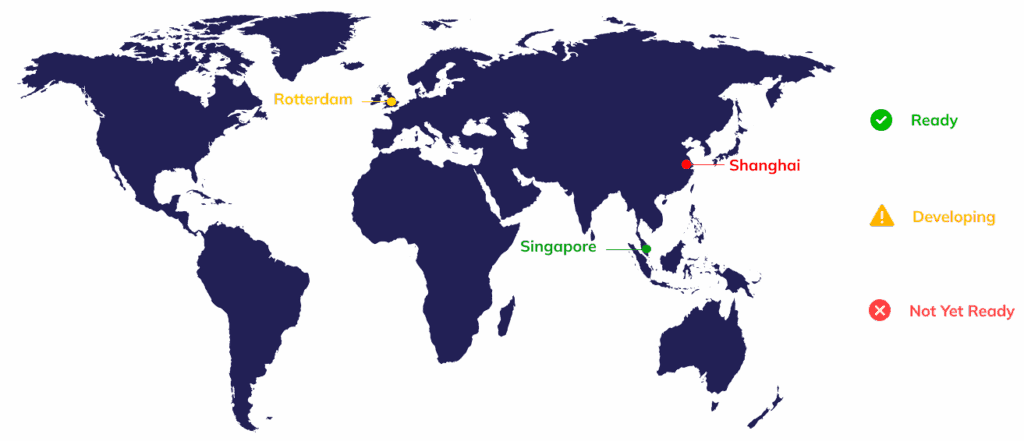
As of May 2025, the specific quality standards for methanol bunker fuel are evolving, with various initiatives and standards being developed. Singapore, for example, has introduced a new standard to facilitate methanol bunkering. This covers various aspects like custody transfer, crew training and the use of mass flow meters (MFMs) to ensure efficient and accurate bunkering processes. Additionally, the CIMAC (International Council on Combustion Engines) has provided guidelines on ISO 6583:2024, which is a technical standard for methanol.
Methanol Bunkering Ports and Future Readiness:
Retrofit challenges and NOx emissions
Retrofitting any vessel for adapting to a new fuel will require close collaboration with a repair yard, which must of course be equipped and competent to plan and perform the work. As well as early project scoping to prepare the vessel, safety systems and engines, plans will have to be drawn up for fuel tank sizes, and requirements for these new/additional fuel tanks may cause fuel tank space to be reduced. So it is important for vessel operators to understand the future operational profile of the vessel, the ensuing fuel demands that this creates and the tank volumes that will be needed. Operators also need to ensure that emissions profiles are understood, including CII calculations and NOx emissions. A major engine conversion (or replacement) may result in the vessel being required to meet NOx tier III levels, thus requiring additional NOx reduction technologies, and any main engine conversion will require new NOx emission certification. Most engine manufacturers also produce NOx reduction technology, such as selective catalytic reduction systems or exhaust gas recirculation. Another such involves addition of water into the methanol.
In parallel, ship managers are being called upon not only to support newbuilds but also to execute technically complex retrofits-making methanol-ready ship management a growing area of specialisation, and with a deep bench of engineering talent and a structured risk management framework, Synergy delivers end-to-end support for methanol vessel operations—from newbuild oversight to daily voyage execution.
Challenges in training
Moving towards a decarbonised future will create new opportunities and new jobs, as the process urgently requires industry workforces to reskill and upskill, and there are already a great many skills initiatives that support a safe, equitable and just transition to zero and nearzero GHG emission fuels, particularly in emerging maritime economies.
The challenge here though is “What level of human competencies and training frameworks are needed for the safe deployment of methanol on board ships”. Zero and near-zero GHG emission fuels such as methanol present unique challenges, and hazards as regards the crew’s health and safety, requiring specialised knowledge and safety measures to be adequately and effectively implemented. However, the current Standards of Training, Certification, and Watchkeeping for Seafarers (STCW) Convention does not yet include guidelines or competency levels when specifically dealing with these new fuels. For methanol, one key concern is the fuel’s high flammability, which requires fire detection methods and updated personal protective equipment (PPE) protocols.
Also, detailed training on methanol’s toxic properties and corrosivity will be necessary in the next phase of the transition. Stakeholders must synergize their efforts to fast-track the development of training provisions for ships using new technologies and alternative fuels, alongside and in parallel with a comprehensive review of the STCW Convention. As the maritime industry undergoes a monumental shift toward alternative fuels and sustainable technologies, the vital importance of seafarers has never been clearer, and there is a critical need for seafarer upskilling and training. As we transition to a greener, more technologically advanced maritime sector, it is essential that our workforce is equipped with the skills and knowledge to navigate these changes safely and effectively. Seafarers are the backbone of global trade and energy transport, and improving their training is not just an industry necessity—it is an investment in safety, efficiency and the future of the maritime sector itself.
At Synergy, we see this as an opportunity to lead—not just with systems and protocols, but through human competence embedded at every level of operations, and as alternative fuels reshape shipping, our approach to future-ready fleet management ensures that shipowners can scale with confidence, backed by technical agility and proven operational depth.
References
- SGMF 2024 – Methanol Bunkering
- Methanol Environmental Benefits – IMO
- ABS – Methanol Bunkering Advisory
- Marine Methanol Report – Methanol Institute
- Lloyd’s Introduction to methanol bunkering
- DNV Bulletin – Methanol as fuel heads for the mainstream in shipping

Dr Sairam K
Assistant Technical Manager MOL SYN training centre.
Dr Sairam K is Assistant Technical Manager with MOL SYN training centre. He was a sailing Chief Engineer with Great Eastern and has over 20 years of experience in teaching. He has completed his research in fuels and has authored technical articles in peer-reviewed international journals. “God is in the details” is his belief.
Dr Sairam K
Assistant Technical Manager MOL SYN training centre.
Frequently Asked Questions
What is methanol and why is it being considered as a marine fuel?
Methanol (CH3OH) is a clean-burning, sulphur-free alcohol fuel produced from natural gas, biomass, or captured CO2 and green hydrogen. It is gaining traction in shipping due to its potential to reduce emissions, ease of storage at ambient conditions, and growing regulatory support for low-flashpoint fuels.
What are the main types of methanol used in shipping?
Methanol is classified by production method:
- Black methanol: from coal, high emissions
- Blue methanol: from fossil fuels with carbon capture
- Green methanol: from biomass or renewable energy and captured CO2 (bio- and e-methanol)
Is methanol a zero-carbon fuel?
Methanol’s carbon footprint depends on its production method. Green methanol can achieve net-zero or even carbon-negative emissions, while fossil methanol (black or blue) does not meet IMO’s long-term decarbonisation goals.
What are the key advantages of methanol as marine fuel?
- No SOx emissions
- Low particulate matter
- Liquid at ambient temperature (no cryogenic storage needed)
- High miscibility in water
- Simpler engine and tank arrangements compared to LNG
What are the challenges of using methanol on ships?
- Lower energy density than HFO (requires more tank space)
- Toxic and flammable, requiring strict safety protocols
- Not yet widely available in green form
- Material compatibility and crew training requirements
Is methanol safe to use as marine fuel?
Yes, methanol is widely handled in the chemical industry. However, its low flashpoint and toxicity necessitate specialised fuel tanks, coatings, vapour handling, and fire safety systems. IMO guidelines (MSC.1/Circ.1621) and class rules now support methanol use.
How does methanol bunkering work?
Methanol is bunkered as a liquid and uses standard bunkering principles. Dedicated safety checklists, nitrogen-inerted ullage requirements, and port-specific protocols must be followed. Key bunkering hubs like Singapore are establishing dedicated methanol guidelines.
What infrastructure exists for methanol bunkering?
The world’s first large-scale commercial e-methanol facility opened in Denmark in 2025. Infrastructure is growing in ports like Singapore and Rotterdam. Industry players are also piloting barge-to-ship and shore-to-ship bunkering systems.
How does methanol compare to ammonia or hydrogen as a fuel?
Methanol offers a simpler transition:
- Easier storage than ammonia and hydrogen
- Existing commercial use and handling experience
- Fewer toxicity concerns than ammonia, but still flammable
- Mid-level energy density, above hydrogen but below HFO
What are the regulatory frameworks supporting methanol as a fuel?
Methanol is covered under:
- MARPOL Annex II as a cargo
- MARPOL Annex VI as a fuel oil
- SOLAS Chapter II-2 and the IGF Code for safety
- ISO 6583:2024 and CIMAC guidelines for fuel quality
- Port and class-specific bunkering standards
What is the lifecycle GHG performance of methanol?
Fossil methanol offers limited GHG savings. However, green methanol—especially from DAC and renewable hydrogen—can deliver full lifecycle net-zero emissions, qualifying under future IMO decarbonisation pathways.
What retrofit challenges are involved in switching to methanol?
Retrofitting involves:
- Coated or new fuel tanks (stainless steel or coated carbon steel)
- Installation of IG systems for tank inerting
- Adjusted fuel supply lines and safety systems
- Engine tuning or replacement to meet NOx Tier III standards
What are the training and competency gaps for methanol operations?
Methanol requires new crew competencies:
- Understanding toxicity, PPE and fire hazards
- Safe handling and storage
- Emergency response protocols STCW does not yet include specific methanol modules, making company-level training critical. Synergy advocates early upskilling and is developing tailored training for dual-fuel operations.
Is methanol viable for both newbuilds and retrofits?
Yes. Methanol engines are being integrated into both newbuild and retrofit projects. CAPEX is lower than LNG due to simpler fuel systems. Existing ballast or fuel tanks can sometimes be converted with proper coating.
How is Synergy Marine Group supporting methanol adoption?
Synergy offers:
- End-to-end project support for newbuilds and retrofits
- Engineering integration for dual-fuel operations
- Crew training and safety protocol development
- Fuel strategy and emissions compliance planning
We combine operational experience with future-ready systems to manage methanol vessels safely and efficiently.
How does methanol fit into the bigger picture of maritime decarbonisation?
Methanol is a transitional fuel that offers a pragmatic route toward lower emissions while infrastructure, technology, and regulation for more advanced fuels continue to mature. Its relative ease of adoption and growing availability make it well-suited for short- and medium-term fleet strategies.
“The greenest tonne of fuel is the one that is never burned.”
— Jesper Kristensen, Group CEO, Synergy Marine Group
At Synergy, we see decarbonisation not only as a fuel choice but as a systems challenge—where efficiency, vessel design, and well-trained crew are equally decisive. Methanol is one piece of that puzzle, and our role is to help owners integrate it seamlessly and safely into real-world operations.