Offshore Ship Management Services
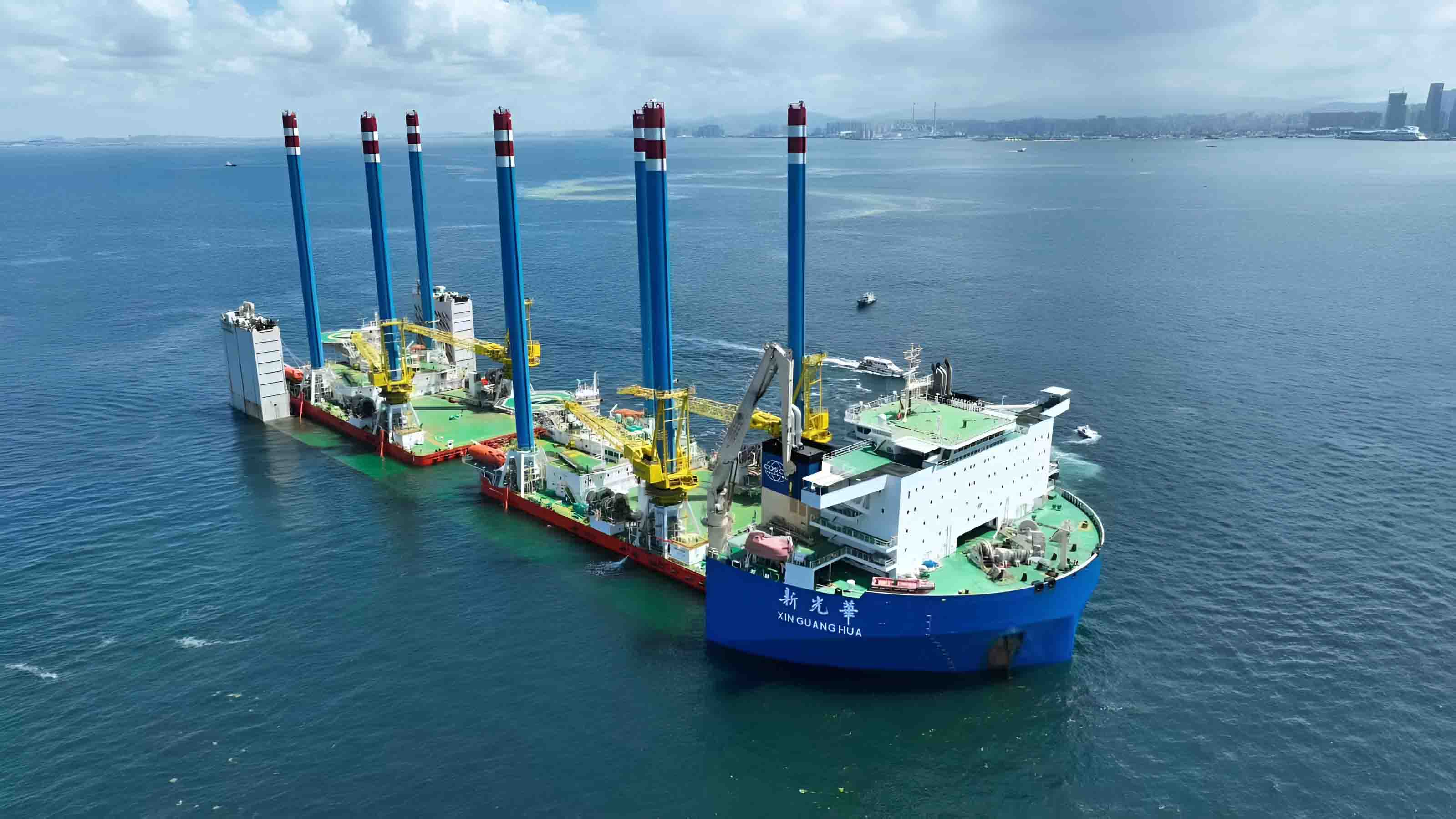
Table of Contents
Why Choose Synergy
In offshore operations, consistency of management discipline is not a quality claim. It is a safety requirement.
Offshore vessels operate in environments where precision is expected, margins for error are limited and operational decisions often carry consequences well beyond the vessel itself.
Whether supporting offshore energy production, subsea construction, offshore renewables or critical marine infrastructure, these vessels work in conditions that demand a different management discipline from conventional merchant shipping. Safety, availability and operational reliability are not competing priorities. They are inseparable. A management approach that achieves two of the three consistently is not sufficient in an environment where all three are expected as standard.
Synergy Marine Group provides technical management and crew operations for offshore vessels across oil and gas, subsea construction, renewable energy and maritime logistics. These services are delivered through Synergy Ship Management, the Group’s dedicated ship technical management capability and part of the wider Synergy Marine Group, the world’s second-largest third-party ship manager.
Discuss your offshore requirements — marketing@synergygroup.sg
Offshore Technical Management
Technical Management as a Commercial Responsibility
In offshore operations, technical management is measured not simply by compliance or machinery reliability, but by vessel availability.
An unexpected technical interruption can affect drilling schedules, subsea campaigns or offshore construction programmes involving multiple contractors operating to a shared timeline. The commercial consequences of a vessel going off-hire in an offshore context extend beyond the ship manager and the owner — they can affect the entire programme the vessel is supporting. Maintaining operational readiness therefore becomes a commercial responsibility as much as an engineering one.
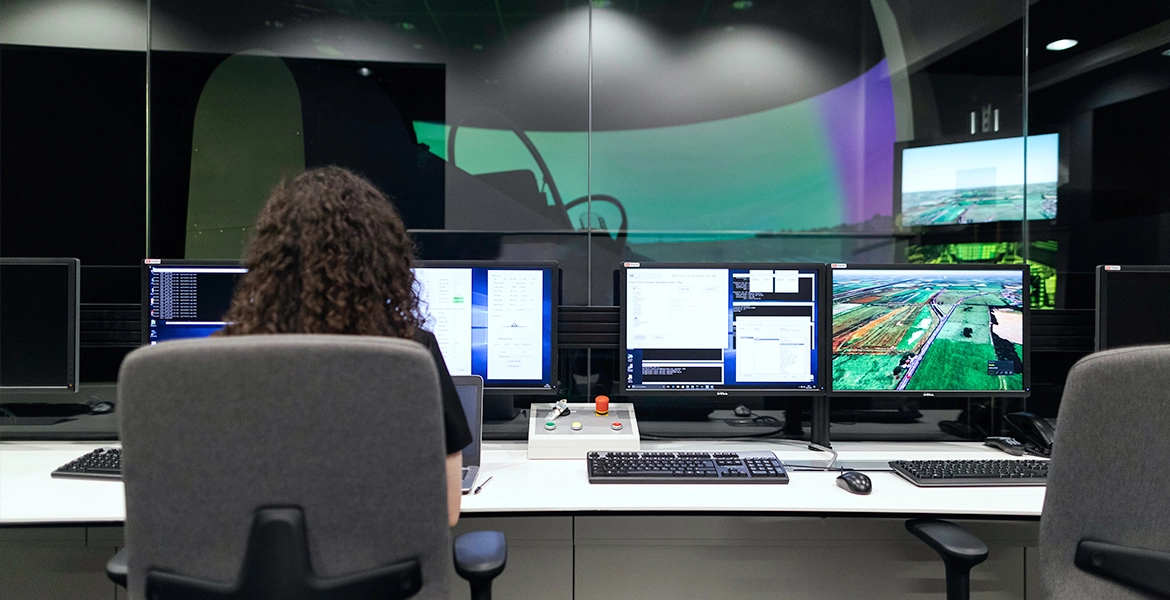
This is the frame within which Synergy Ship Management approaches offshore technical management. Maintenance planning prioritises availability without deferring work that affects safety systems. Procurement for specialised offshore equipment — DP reference systems, subsea deployment gear, anchor handling equipment — is managed with forward planning disciplines that reflect the availability requirements of offshore contracts rather than the more flexible timelines of conventional merchant trades. Machinery trends are monitored continuously through OceanEye and the Remote Operations Optimisation Centre, giving shore teams and vessel officers a shared operating picture that supports earlier intervention before availability is affected.
Offshore Expertise
What the Offshore Environment Demands
Offshore vessel management differs from conventional shipping management in ways that are operationally consequential, not simply technical.
Dynamic Positioning systems require maintenance disciplines inseparable from safety outcomes. DP class requirements — the annual trials, the verification of thruster systems, power management and reference systems, and the maintenance of FMEA documentation — determine whether a vessel can hold position safely in proximity to an installation and whether a drive-off incident becomes possible. Managing DP-classed vessels requires shore teams who understand the IMCA framework, the expectations of client audits and the operational significance of a DP incident notation — not only the technical specifications of the systems involved.
The permit-to-work culture in offshore operations, and the management of simultaneous operations, places specific demands on crew competence and shipboard safety management that go beyond the ISM Code minimum. In many offshore contracts, the client’s own safety and vetting standards exceed the regulatory requirement. Vessels must be prepared for client audits as part of routine operations, not as periodic events. The management framework must ensure that the standard set ashore is consistently maintained on board, across crew rotations and across the operating environments the vessel encounters.
Crew on offshore vessels operate in an environment that changes continuously — weather windows, proximity to fixed infrastructure, subsea hazards, the operational requirements of the client on the installation. Their preparation must reflect those demands specifically rather than a general maritime competence applied to an offshore context.
Offshore Fleet
The Fleet We Manage
Synergy’s offshore management capability extends across the principal vessel types in the offshore support and construction sector.
Platform Supply Vessels transport fuel, equipment and critical supplies to offshore installations — operations where schedule reliability and cargo handling competence directly affect production continuity. Anchor Handling Tug Supply vessels provide towing, anchor handling and rig mooring support across some of the most physically demanding offshore operations conducted at sea. Multi-Purpose Support Vessels cover logistics, maintenance and emergency support across a range of offshore functions requiring operational versatility as well as technical competence.
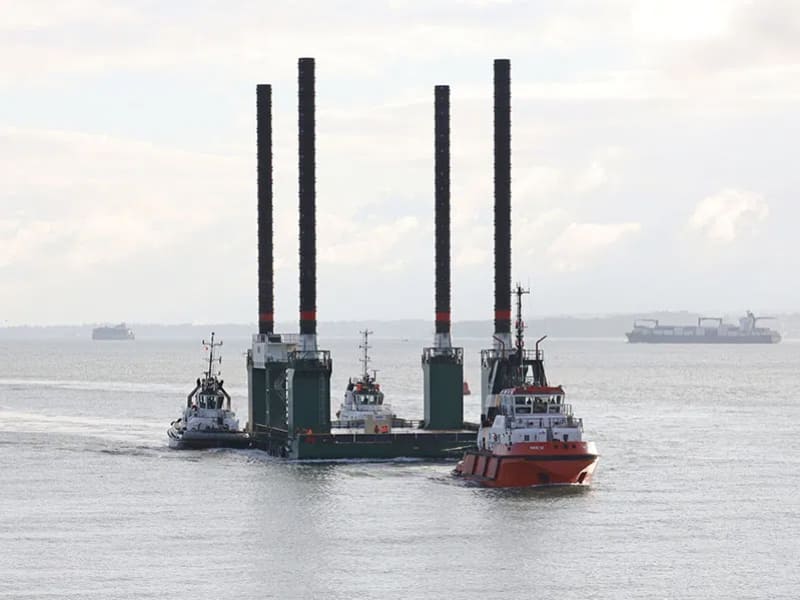
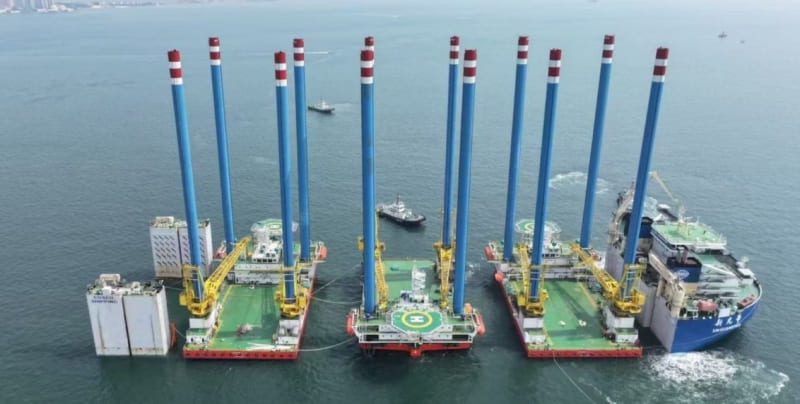
Dive Support Vessels and ROV Support Vessels facilitate subsea operations including pipeline inspections, IMR work and subsea construction — vessel types where the interface between the vessel management function and the subsea operations conducted from it requires continuous coordination. Jack-up barges and heavy lift vessels support offshore construction, installation and decommissioning across the energy sector.
Cable-Laying Vessels
Cable-laying vessels support offshore wind, subsea power transmission and communications infrastructure through cable transport, installation, burial, protection and survey operations. Their management requires close coordination between vessel operations and specialist project personnel, together with disciplined DP assurance, machinery reliability and readiness of mission-critical equipment.
Synergy Ship Arabia, the Group’s Saudi Arabia-based operation, manages jack-up barges for Jana Marine Services across offshore energy operations in the Kingdom — reflecting both the growth of the offshore sector in the region and the Group’s commitment to building local operational capability aligned with Saudi Arabia’s Vision 2030 programme.
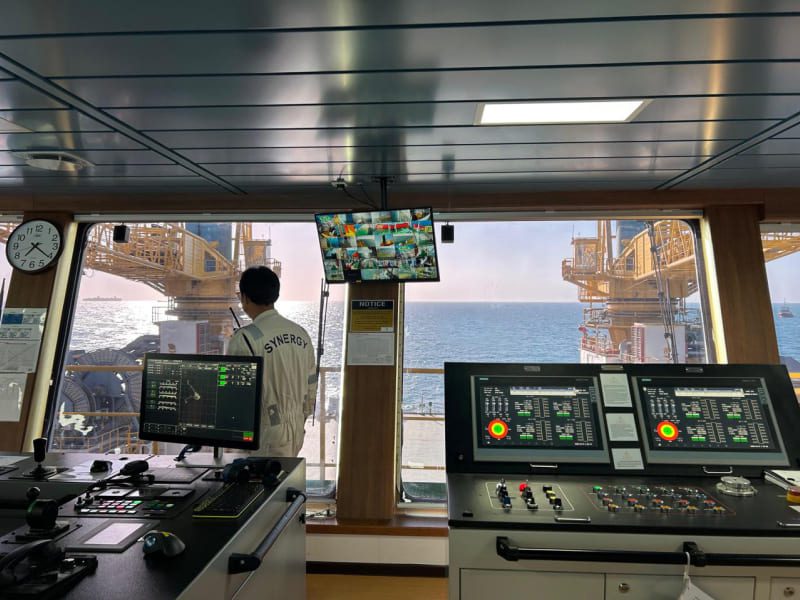
OCEANUS 1: Supporting Offshore Cable Operations
Synergy Marine Group provides technical and crew management for OCEANUS 1, ATE Energy International’s Taiwan-flagged DPS-2 cable-laying vessel.
Designed for offshore wind, subsea power transmission and wider marine infrastructure projects, the vessel is equipped with an 8,000-tonne cable carousel, a 250-tonne hydraulic A-frame, a 40-tonne service crane, jet-plough capability and a work-class ROV.
Synergy’s role supports vessel readiness, machinery reliability, DP assurance and crew capability while specialist project teams undertake cable installation, trenching, protection, jointing and survey operations.
Renewables & Marine Construction
Renewables & Marine Construction
Offshore Renewables and Marine Construction
The management disciplines developed in offshore oil and gas — high-integrity maintenance, DP assurance, complex marine logistics and rigorous HSE performance — translate directly to offshore wind, floating energy infrastructure and other marine construction activities.
This is not a future aspiration. Offshore renewables and marine construction projects draw on the same vessel types, the same technical management requirements and the same crew competence standards as oil and gas support.
Owners transitioning assets between sectors, or commissioning vessels for offshore wind support roles, bring those requirements with them. A ship manager whose offshore capability is limited to oil and gas support is not capable of meeting the full range of what the offshore sector now demands.
The regulatory and environmental requirements affecting the offshore fleet are also evolving. Fuel optimisation, emissions monitoring and compliance with carbon frameworks apply across offshore vessels as they do in conventional shipping — with the additional complexity that alternative fuels are less accessible in many offshore locations. Managing offshore vessels toward improved environmental performance requires technical management that integrates these constraints into routine fleet operations rather than treating them as separate obligations.
Offshore operations demand a management approach in which technical expertise, disciplined execution and operational awareness work together every day.
That is the standard Synergy Ship Management applies across every offshore vessel under its care.
Contact Synergy Ship Management: marketing@synergygroup.sg
Related capability: Offshore projects and vessel lifecycle support
Planning a new offshore asset, conversion or major retrofit? Explore Synergy Marine Projects’ capabilities across feasibility, design review, newbuilding supervision, conversion, commissioning and operational readiness.
FAQs
Frequently Asked Questions
What offshore vessel types does Synergy manage?
Synergy manages Platform Supply Vessels, Anchor Handling Tug Supply vessels, Multi-Purpose Support Vessels, Dive Support Vessels, ROV Support Vessels, jack-up barges and heavy lift vessels — across oil and gas, subsea construction, renewable energy and maritime logistics operations.
What regions does Synergy's offshore management capability cover?
Synergy manages offshore vessels across the Middle East, including through Synergy Ship Arabia in Saudi Arabia, as well as Europe and Asia-Pacific.
How does Synergy approach Dynamic Positioning management?
DP class requirements — including annual trials, verification of thruster systems, power management and reference systems and maintenance of FMEA documentation — are managed as an integral part of the technical management framework for each DP-classed vessel. Shore teams are experienced in the IMCA framework, client audit expectations and the operational significance of DP class maintenance, not only the technical specifications of the systems involved.
How does Synergy prepare vessels for client audits and permit-to-work requirements?
The management framework is designed so that vessels are prepared for client audits as part of routine operations. Permit-to-work systems and simultaneous operations management are treated as standard elements of offshore crew competence and shipboard safety management, not as supplementary requirements applied before an inspection.
Does Synergy manage offshore vessels for the renewable energy sector?
Yes. The technical and safety management disciplines applied in oil and gas offshore support — DP class maintenance, proximity operations, HSE compliance and crew competence in complex operating environments — apply directly to offshore wind and marine construction support. Synergy manages vessels across both sectors.
How does OceanEye support offshore vessel management?
OceanEye provides continuous performance and condition monitoring across the managed offshore fleet through Synergy’s Remote Operations Optimisation Centre. Shore teams and vessel officers work from a shared operating picture that supports earlier intervention, more consistent maintenance outcomes and proactive identification of emerging technical issues before availability is affected.
Does Synergy support offshore newbuildings and conversions?
Yes. Synergy Marine Projects provides newbuilding supervision and conversion management for offshore vessels. For owners commissioning new vessels or converting assets for offshore roles, the project and technical management teams work together throughout the construction process.
How does Synergy approach crew welfare?
As a standard operational obligation — through multilingual support, accessible family communications, responsive shore team engagement, transparent payroll management and a relationship team covering seafarers and their families throughout each assignment.