By Ravinder Singh, General Manager, Synergy Marine Group
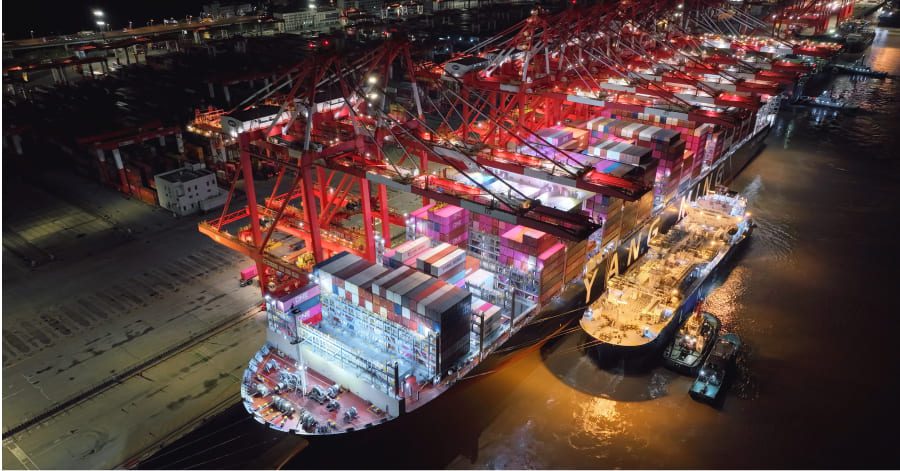
YM WILLPOWER, a 15,500 TEU LNG dual-fuel containership, bunkered LNG in Shanghai while container handling continued alongside.
YM WILLPOWER, Yang Ming Marine Transport Corporation’s 15,500 TEU LNG dual-fuel containership under Synergy Marine Group’s technical management, bunkered LNG at the Port of Shanghai while container handling continued alongside. It was the vessel’s first LNG bunkering carried out through simultaneous operations, or SIMOPS, completed in collaboration with Shanghai International Port (Group) and SIPG Energy Shanghai.
15,500 TEU
LNG dual-fuel containership
Feb 2026
Synergy technical management begins
100+
LNG bunkering operations across the fleet
What LNG SIMOPS changes operationally
SIMOPS allows LNG bunkering and cargo handling to take place in parallel rather than sequentially. For an LNG-fuelled vessel, that requires the ship, bunker supplier, terminal, port and supporting shore teams to work within a coordinated operating and safety framework.
The benefit is practical: the vessel can receive fuel within the cargo-handling window, supporting a more efficient port call while its normal commercial work continues.
Preparing the vessel and crew
Synergy Marine Group assumed technical management of YM WILLPOWER in February 2026. The vessel has a high-pressure LNG dual-fuel main engine. Synergy’s management scope includes crewing, maintenance, safety management and performance monitoring, supported by ship staff with LNG-fuelled operational experience and shore-based technical teams.
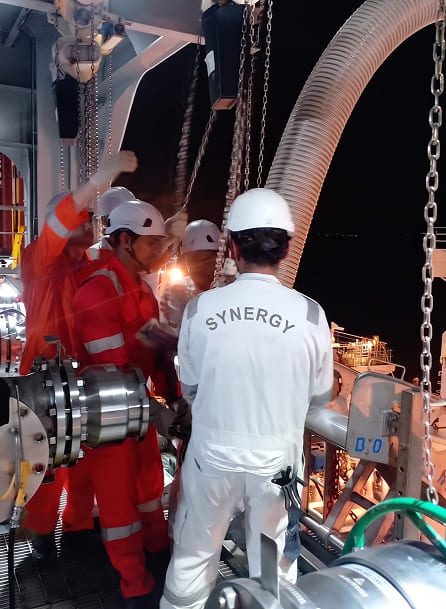
Preparation for the Shanghai call went beyond a standard LNG bunkering plan. The ship and shore teams completed a SIMOPS-specific risk assessment covering the interaction between LNG transfer and continuing cargo work, including crane movements, dangerous-goods and reefer containers, vessel movement and emergency access.
The cargo plan and exclusion zones were reviewed so that suspended loads, vehicles and personnel stayed clear of the transfer area, with defined limits on crane movement around the manifold and bunker vessel.
Communications and emergency-response arrangements were agreed across the vessel, bunker supplier and terminal before transfer began, together with clear stop criteria.
Mooring, vessel movement and access routes were monitored throughout, with dedicated oversight of the interface between bunkering and cargo operations.
Building repeatable dual-fuel capability
YM WILLPOWER and her sister vessel YM WORTHINESS form part of Synergy Marine Group’s substantial and growing dual-fuel management portfolio.
Across that fleet, more than 100 LNG bunkering operations have been conducted at major supply hubs worldwide, and the number continues to grow. The Shanghai call adds a containership SIMOPS operation to that record.
For the technical manager, dual-fuel capability extends beyond the propulsion system. It requires the crew, procedures and shore organisation to support the vessel safely and repeatedly in commercial service.
YM WILLPOWER’s Shanghai call is one example of that capability in operation.
ABOUT THE AUTHOR
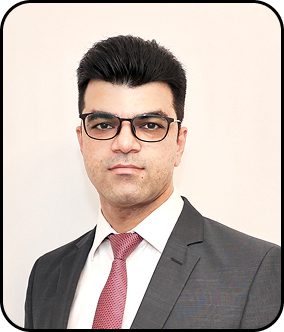
Ravinder Singh
General Manager, Synergy Marine Group.
Ravinder Singh is General Manager with Synergy Marine Group in Pune, where he oversees the technical performance, maintenance and compliance of a fleet of bulk carriers and containerships, including LNG dual-fuel container vessels. A marine engineer with more than 23 years of maritime experience, including 13 years at sea, he spent more than a decade with Chellaram Shipping, where he sailed as Chief Engineer, and later worked with Eastern Pacific Shipping. His work brings together crew, owners, shore teams and vendors to support technically complex vessel operations.