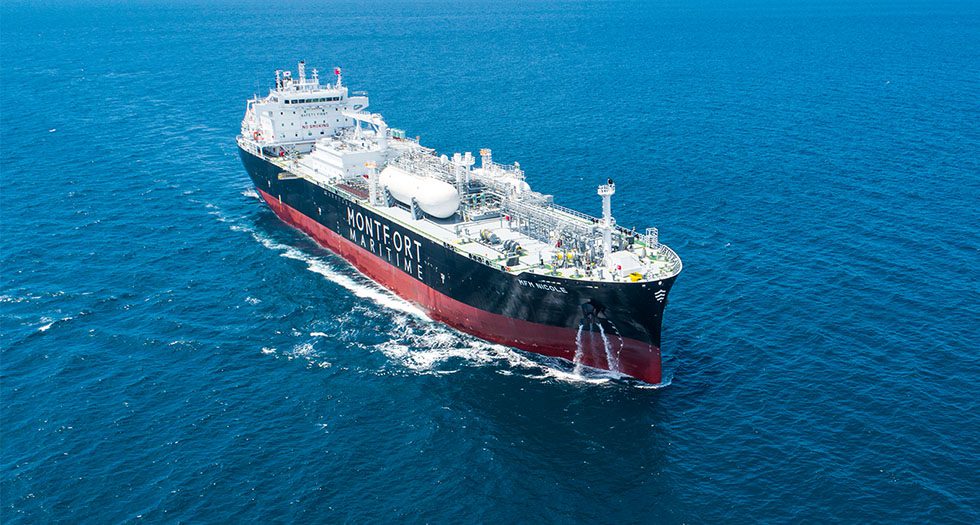
MFM NICOLE, a newly built 39,200 m³ fully refrigerated LPG carrier, joined Synergy Marine Group’s managed fleet on 21 July 2026. Owned by Asian Shipping S.A., the Singapore-flagged, Lloyd’s Register-classed vessel is under the technical management of Synergy Maritime Gas Pte. Ltd.
Her MAN B&W ME-LGIP main engine can run on LPG as well as conventional fuel oil, bringing LPG operations into the engine room as well as on deck. Her three IMO Type A cargo tanks can accommodate LPG and anhydrous ammonia, broadening her cargo capability. Ammonia carriage is a cargo function, separate from her LPG dual-fuel propulsion.
MFM NICOLE adds to Synergy’s experience managing LNG, LPG and methanol dual-fuel vessels across gas carriers, container ships, tankers and bulk carriers. That experience informs crew preparation, maintenance planning and advice to owners on fuel use and vessel performance.
The global newbuilding market shows owners continuing to invest in alternative-fuel capability while regulation develops. DNV’s September 2026 update recorded 311 alternative-fuelled vessel orders in the first nine months of the year, 53% more than in the same period of 2025. These are new orders placed during that period, rather than the total outstanding orderbook.
The next stage of IMO negotiations comes at MEPC 85, scheduled for 30 November–3 December 2026. According to IMO’s latest meeting summary, the extraordinary session considering adoption of the Net-Zero Framework is scheduled to resume on 4 December, subject to discussions at MEPC 85. The framework remains under negotiation, leaving owners to assess investments across different possible regulatory outcomes.
For a ship manager, this connects long-term planning with daily operations. Owners need to understand how fuel choices affect costs and vessel performance, while seafarers need the competence and shore support to put those choices into practice.
Jesper Kristensen, Group CEO, Synergy Marine Group, said:
“A ship ordered today will trade for decades under rules that are still being negotiated. The right fuel decision is the one that holds up across her total cost of ownership, not only her first years in service, and owners need evidence from ships already operating to judge that. Our job is to bring that evidence to their decisions, and to make sure our seafarers have the training and shore support to run these vessels well.”
Managing a dual-fuel vessel involves more than familiarity with the main engine. Fuel handling, maintenance and coordination between deck and engineering teams all require preparation. The value of operating experience lies in applying those lessons to the next vessel, with shore colleagues supporting the people responsible for her daily operation.
The photographs accompanying this announcement share something of the enthusiasm on board MFM NICOLE. To Captain Chithiravel Velu, Chief Engineer Hemant Kumar and all our seagoing colleagues: thank you for the expertise and care you bring to her operation. We are pleased to share this moment with you.
We thank Asian Shipping S.A. for entrusting MFM NICOLE to our care, and our shore colleagues for supporting her crew. Safe voyages to everyone on board.
Learn more about Synergy’s dual-fuel vessel management and Ship Management 2.0 approach.