

A bridge watch during hours of darkness. Joebert’s essay reflects the judgement, humility and teamwork required when an Officer of the Watch recognises the need to call the Master early.
“Captain, sir, sorry to call you in time of your rest, but I need you here on the bridge right now.” Afraid and humbled, I called my Master when I was a junior officer.
“Call Master when in doubt.” A simple phrase, easy to remember and often mentioned last in the Master’s standing order and night order book. But have you ever asked yourself, when can you say that you are in doubt?
Shipping is vital to the global economy. The majority of what we need and use in daily living is transported by ship. But it is also in shipping that normal navigation can become a very dangerous situation in a matter of minutes, or even seconds, if a wrong decision is made by a navigator. One decision by the OOW can affect the safety of the ship, the cargo, the environment and, most of all, the safety of the entire crew. This responsibility to safety is heavy enough, and sometimes requires irreversible decisions, that the OOW has to call for the Master’s help. But for some, calling the Master shows weakness and incompetence. Others are afraid of judgement. And sometimes, for a few, rank or stripes means ego and pride.
As I recall, I was a junior officer when I encountered heavy traffic, a heavy density of fishing boats and fishing nets along the route. The engine was already on standby, extra lookout posted, helmsman on the bridge doing hand steering. All navigational equipment was being optimised and utilised. “Everything is under control,” says a young and proud junior deck officer. Until alarms on the radar started beeping. CPA to a target was zero. Slowing down was not an option, since it could result in another close quarters situation with another vessel. Fishing nets and shallow waters were all around. I knew I should do something in ample time, but a tiny question started to rise in my head: “Shall I call the Master?” The time to make a decision was very short. The gap between safety and a catastrophic incident is very thin, and that is the quick moment to decide. What would the Master think of me? Or maybe the Captain will be angry. How could I maintain the Master’s impression that I am a good navigator? This is a simple traffic condition, why should I call him? These were my questions after thinking of calling the Master, but the CPA remained zero, the bearing was not changing and the target distance was decreasing. The young and proud navigator acknowledged that help from the experienced one was needed. In a few seconds, I disregarded those questions which focused on myself and ego alone.
At about 0200 LT, while the Master was resting, he received a call from a young and humbled OOW. “Captain, sir, sorry to call you in time of your rest, but I need you here on the bridge right now.” In a few moments, the Master was on the bridge. He analysed the situation and took over the conn. Through experience, teamwork with an increased bridge watch level, and inputs from every bridge team member, the Master made a safe action and the situation was brought back to safety. “Thank you for calling me early. That is the best decision you have ever made,” the Master said before giving the conn back to me. I learned by that time that my pride and ego cannot save the crew and cannot avoid an incident either. But teamwork among bridge team members, and recognising the situation where help from senior officers is needed, can overcome the overwhelming and make the situation safe. This is why bridge watch level needs to be adjusted. Decision-making in navigation must not rely on one man’s head alone. It needs the contribution of every bridge team member who is not afraid to be judged or reprimanded when speaking up and giving a suggestion.
So how about the earlier question, “when can you say that you are in doubt?” For me, it is the very moment when you start asking yourself, “Shall I call the Master?” Do not make any other follow-up questions, especially if the next question focuses on you and yourself alone. That is wasting extra few seconds where your decision to call the Master is very vital. And that is the moment that mattered.
About Joebert
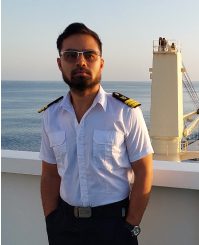
Joebert Canja, Chief Officer, Amis Xcel
Joebert Daylusan Canja is Chief Officer onboard MV AMIS XCEL and holds a Master’s licence. As head of the deck department, his responsibilities include ship stability, ballast and cargo operations, deck maintenance, onboard safety and crew training.
Joebert began his Synergy career in 2017 as an Able Seaman and was promoted to Chief Officer in 2023. He believes that continuous learning and training are essential to professional growth, and sees the ship as both a workplace and a place of learning. During leave, he enjoys travelling, beaches, surfing and spending quality time with his family