
Methanol has moved from industry discussion to active deployment. Orders for methanol-capable vessels are increasing, and several container operators have accelerated adoption.
For shipowners, however, the central question is not whether methanol is attracting attention. It is whether it can be operated safely, consistently and commercially within the realities of day-to-day fleet management.
This article considers methanol not as a concept, but as an operating fuel. The focus is practical: safety, engineering integration, crew readiness and commercial implications.
Why Methanol Is Drawing Interest?
Methanol offers characteristics that appeal to owners navigating regulatory uncertainty.
It can be stored as a liquid at ambient temperature. Existing port infrastructure can be adapted in certain locations. Engine manufacturers have brought dual-fuel methanol solutions to commercial maturity. When sourced from certified renewable pathways, methanol may also present the potential for reduced lifecycle greenhouse gas emissions.
Unlike LNG, methanol does not require cryogenic storage. That simplifies certain aspects of vessel design. At the same time, it introduces its own operational considerations.
How Methanol Dual-Fuel Systems Work in Practice
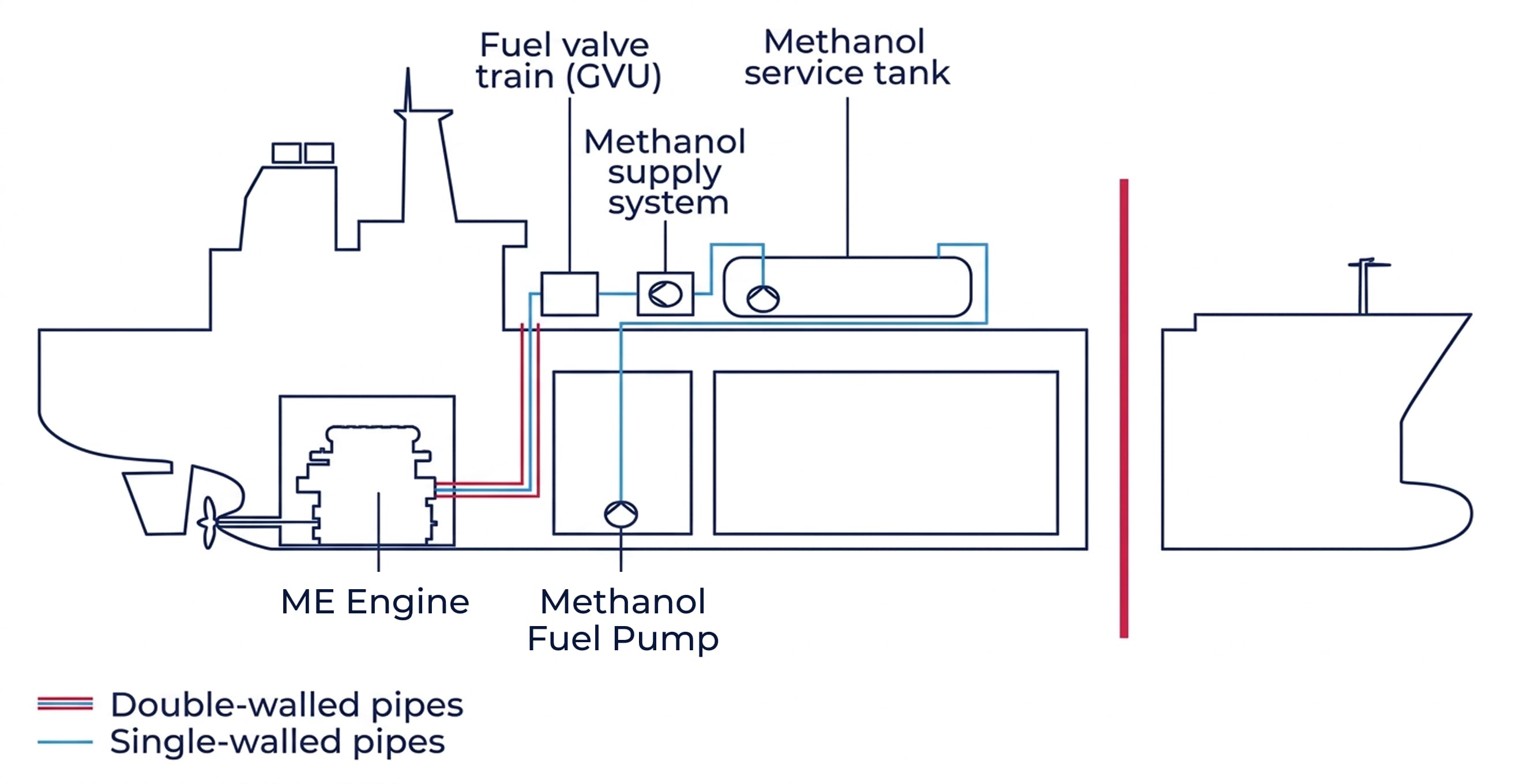
Methanol-capable vessels are typically fitted with engines that can operate on both conventional marine fuels and methanol. The arrangement includes dedicated storage tanks, fuel supply systems, safety interlocks and ventilation measures designed specifically for methanol’s properties.
Fuel changeover is conducted in accordance with approved procedures, taking into account operational planning, fuel availability and applicable regulatory requirements.
Fuel flexibility is only meaningful if it is supported by steady technical oversight and disciplined operation.
Safety in Daily Operations
Methanol is flammable and toxic. While it avoids the complexity of cryogenic storage, it requires careful segregation, appropriate materials selection and structured bunkering procedures.
Safe operation depends on:
- Clear system boundaries and segregation
- Ventilation and detection systems
- Controlled bunkering protocols
- Crew familiarity with emergency response procedures.
In practice, risk management in methanol operations is procedural. It is the result of preparation, repetition and oversight rather than technology alone.
Methanol and LNG: Different Profiles, Similar Discipline
Owners often compare methanol and LNG. The engineering differences are clear.
| Methanol | LNG |
|---|---|
| Methanol infrastructure is expanding but remains uneven across regions. | LNG bunkering networks are established in several global hubs. |
| Methanol requires careful handling due to toxicity and flammability. | LNG requires cryogenic containment and management of boil-off gas. |
Despite these differences, both fuels demand trained crews and structured management. Neither replaces the fundamentals of disciplined ship operation.
Commercial Considerations
Fuel selection today is not purely technical. It sits at the intersection of regulation, chartering and long-term fleet strategy.
Owners must consider:
Availability of complaint fuel supply

Price Volatility relative to conventional fuels

Regulatory treatment under evolving carbon frameworks

Allocation of alterantive fuel costs within charter agreements
When evaluating emissions performance, lifecycle impacts are typically assessed on a well-to-wake basis, considering greenhouse gas emissions across the full value chain from production through onboard combustion.
Methanol presents opportunity, but it also requires informed planning.
Crew Readiness
Alternative fuels alter routines onboard. Methanol systems require specific handling procedures, updated emergency drills and clear documentation practices.
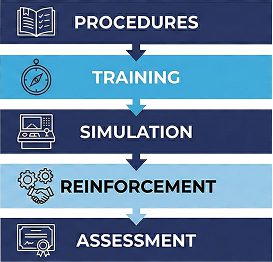
Training is not a one-time exercise. It must be reinforced through simulation, mentoring and structured assessment. Beyond compliance, structured preparation builds operational confidence during fuel transition phases, particularly in the early months of deployment.
Shore-based technical teams play an equally critical role. Continuous monitoring, guidance and incident preparedness ensure that onboard practices are consistently supported.
Operational consistency ultimately rests with people. The propulsion system may change; the need for competence does not.
Early Operational Experience
As of February 2026, the container vessel MAERSK FINISTERRE, owned by NKS Canopus (Nissen Kaiun Singapore Group) and chartered to A.P. Moller – Maersk, operates under Synergy Marine Group’s technical management.
Its deployment demonstrates that methanol dual-fuel capability can be integrated into active liner service when supported by structured oversight and prepared crews.
Operational maturity develops through repetition and disciplined execution rather than technological novelty.

Is Methanol a Long-Term Solution
Methanol is part of a wider transition that includes LNG, biofuels, ammonia and other emerging pathways.
No single solution currently serves every vessel segment or trade route. Many owners are choosing flexibility, designing vessels capable of adapting as fuel markets evolve.
Methanol represents one such pathway. Its long-term role will depend on supply chains, lifecycle emissions performance, regulatory frameworks and operational reliability.
By partnering with Synergy Marine Group, shipowners gain more than management; they gain a global ally dedicated to safety, efficiency, and long-term value creation.
Conclusion
Methanol offers practical advantages and growing infrastructure support. Its success, however, depends less on promise and more on execution.
For shipowners, the question is straightforward: can the vessel operate predictably?
Alternative fuels may change propulsion systems. They do not change the need for disciplined ship management.
By partnering with Synergy Marine Group, shipowners gain more than management; they gain a global ally dedicated to safety, efficiency, and long-term value creation.
Frequently Asked Questions
What is methanol as a marine fuel?
Methanol is a liquid fuel that can be used in marine engines designed for dual-fuel operation. These engines allow a vessel to run on methanol alongside conventional marine fuels, providing operational flexibility as fuel markets and regulations evolve.
Why are shipowners considering methanol?
Shipowners are considering methanol because it can be stored as a liquid at ambient conditions, engine technology is commercially available, and fuel supply networks are gradually expanding.
When produced from certified renewable pathways, methanol may support lower lifecycle greenhouse gas emissions compared to conventional fuels. These reductions are generally evaluated on a well-to-wake basis.
How does methanol differ from LNG in daily operations?
LNG requires cryogenic storage and management of boil-off gas. Methanol does not require cryogenic containment but is flammable and toxic, which demands strict handling procedures, appropriate materials and disciplined bunkering practices.
Both fuels introduce additional operational layers compared to conventional marine fuels and require trained crews and structured oversight.
Is methanol safe to use onboard?
Methanol can be operated safely when vessels are properly designed and approved procedures are followed. Safety depends on system segregation, ventilation, leak detection, controlled bunkering and crew familiarity with emergency response measures.
As with any fuel, risk is managed through preparation and consistent operational discipline.
Does methanol require specialised crew training?
Yes. Crew members must understand fuel handling procedures, safety protocols and system operations specific to methanol propulsion. Simulation-based familiarisation and structured assessments help ensure readiness before vessels enter service.
Is methanol infrastructure widely available?
Methanol bunkering infrastructure is expanding, particularly in key commercial hubs. However, availability remains uneven across regions. Owners typically evaluate trading patterns and supply certainty before committing to long-term fuel strategies.
Is methanol a long-term solution for shipping?
Methanol is one of several pathways being explored as the industry transitions toward lower-emission operations. Its long-term role will depend on supply chain development, lifecycle emissions performance, regulatory frameworks and commercial reliability. Many owners are adopting fuel-flexible designs to retain strategic optionality.
Does operating a methanol vessel require different ship management practices?
The fundamentals of ship management remain unchanged. However, methanol propulsion requires additional technical oversight, structured maintenance planning and disciplined fuel handling procedures. Integration into an established management framework is essential to maintain safety and operational stability.