
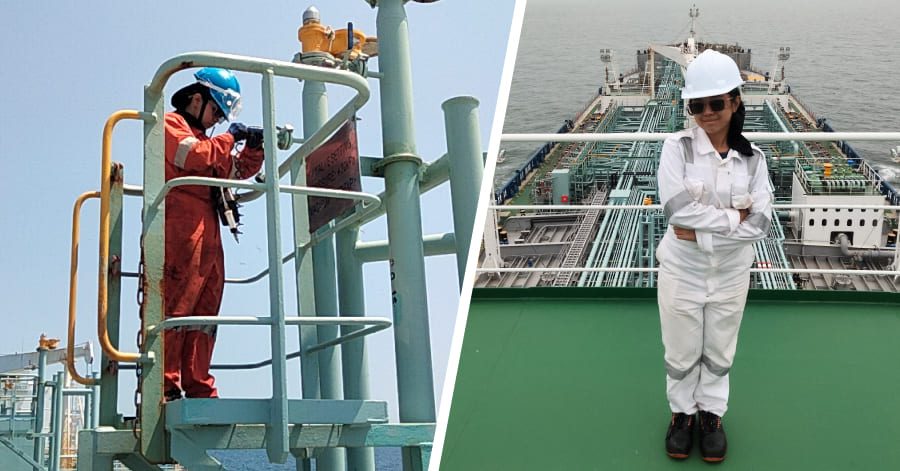
Rhencel Marie Restoles, Deck Cadet, is at the earliest stage of her seafaring journey, where learning is constant and responsibility is gradually earned. Her entry into the profession is shaped by a deeply personal motivation, but what defines her today is how she has adapted to life at sea — taking on unfamiliar routines, building confidence and finding her place within a working crew. As a cadet, her experience is rooted in observation, discipline and incremental trust. From early morning bridge watches to hands-on deck work, her days are structured around learning by doing, supported by officers who guide her progression. In this conversation, she reflects on her first experiences at sea, the challenges of stepping into a demanding environment, and the quiet milestones that mark the beginning of a career.
1. What inspired you to choose a maritime career, and how has your journey evolved since your first days in pre-sea training?
My decision to pursue a maritime career is closely connected to my father, who was a seafarer. Although I have not known him personally, his story stayed with me, and choosing this path felt like a way to carry that forward in my own way. Pre-sea training was challenging, particularly as I had to adjust quickly to a new environment and expectations. Joining the vessel brought a further shift. Being the only female cadet on board required adjustment, but over time I became more focused on learning, improving and working towards becoming an officer.
2. What have been the most meaningful skills or habits you have developed at sea that shape how you work today?
Time management has been one of the most important habits I have developed. Being punctual and organised is essential on board, and it is something I now apply consistently. I also gained confidence during bridge duties, particularly while assisting during anchor watch. Taking on these responsibilities, even as a cadet, helped me realise that I could handle more than I initially expected.
3. How would you describe your experience sailing with Synergy in terms of safety culture, teamwork and support on board?
My experience has been supportive, especially as a cadet learning the ropes. There is a clear emphasis on safety, with regular reminders to remain cautious and aware of risks. Teamwork on board is strong, particularly during toolbox meetings and daily operations. Despite being the only woman on board, I have felt included and supported by my colleagues, who have been willing to guide me as I learn.
4. Could you walk us through a typical day on board and the aspects of your role that require the most focus and judgment?
My day typically starts with bridge watch from 4 am to 8 am alongside the Chief Officer. After that, I spend time on deck learning maintenance work with the crew. In the afternoon, I work with the Third Officer, focusing on safety equipment and operational tasks. The areas requiring the most focus are understanding bridge equipment, learning how to use it correctly and becoming familiar with the documentation and procedures involved in operations.
5. Has there been a moment at sea that left a lasting impact on you, either personally or professionally?
The sense of camaraderie on board has left a strong impression on me. One moment I will always remember is my first birthday at sea, when the crew took the time to celebrate despite ongoing work. Professionally, being trusted with responsibilities such as anchor watch was a significant moment. It made me feel that I was progressing and being recognised for my efforts.

6. How do you see technology and digitalisation influencing shipboard roles, decision-making and future career pathways?
Technology has made communication faster and supports decision-making on board. It helps make tasks more efficient and improves coordination. At the same time, it is important to use these tools correctly and understand their role. Technology can make work easier, but it still requires proper knowledge and responsibility in its use.
7. What qualities do you believe are essential for mariners today, and how do you consciously cultivate these in yourself?
Patience is one of the most important qualities at sea. Working with different people requires understanding and the ability to manage situations calmly. I try to develop this by being mindful in how I interact with others and by addressing situations respectfully. Learning to communicate properly and maintain composure is something I continue to work on.
8. What gives you the greatest sense of fulfilment or purpose at sea, and how does that compare with time spent ashore?
My greatest sense of fulfilment comes from realising that I am capable of doing this work and growing into the role. Being at sea has helped me become more independent and confident. Time ashore allows me to share this growth with my family, but the experience at sea has been important in shaping how I see myself and my future.
9. In what ways have you seen the maritime workplace become more inclusive, and what further progress would you like to see?
I have seen positive changes in terms of inclusivity, especially with more women joining training programmes and cadet intakes. There is also greater awareness around professional conduct and equal opportunity. Further progress can come through increased representation in senior roles and continued focus on mentorship. Having more visible role models on board would make a meaningful difference for cadets like me.
10. What would you say to young people considering a maritime career?
I would encourage them not to let doubts or assumptions hold them back. Life at sea can be demanding, but it also offers valuable experiences and opportunities to grow. Confidence develops with time and experience. If you are willing to learn and stay committed, this career can open doors and help you build a strong sense of purpose.