
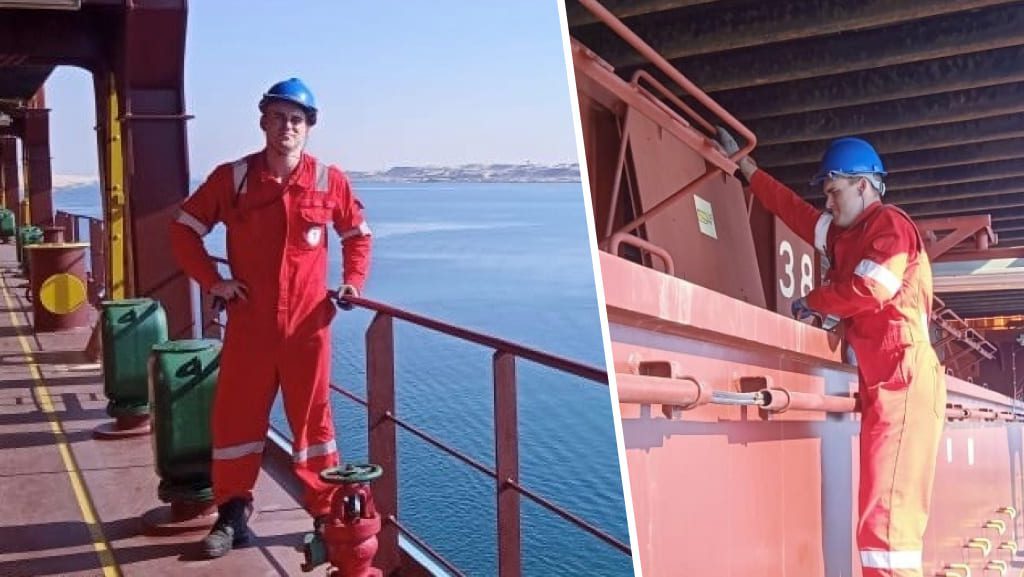
1. What first drew you towards a career at sea, and how did the cadetship opportunity with Auriga and Synergy come about?
I was first drawn to shipping because it offered a mix of travel, responsibility and hands-on work, which appealed to me more than a conventional office-based career. I started working at sea with Auriga Group on coastal landing barges in Northern Australia, and after about a year I had the opportunity to begin a cadetship. This gave me the chance to study and complete my sea time internationally on tanker and container ships with Synergy
2. Before joining your first vessel, what did you imagine life at sea would be like, and what surprised you most once you were actually onboard?
Before joining my first vessel, I imagined life at sea would involve travel, adventure and hard work, and it has certainly lived up to those expectations. What surprised me most was how quickly life onboard started to feel normal, and how much you learn simply by being around the crew every day. I was also surprised by how fast-paced operations can be, particularly on a large container ship, which made the experience both interesting and rewarding.
3. Can you describe a typical day during your cadetship, including the practical tasks, watchkeeping exposure and learning moments that stood out?
A typical day onboard a container ship as a deck cadet depends a lot on whether we are at sea or in port, but it always involves a mix of watchkeeping, deck maintenance with the crew and learning from the officers onboard by assisting them. Throughout my cadetship, I have had exposure to passage planning, navigational equipment, cargo work and general shipboard operations, which has been very valuable in building practical experience.
4. What has been the most valuable lesson you have learned from the Master, officers and crew so far?
The most valuable lesson I have learned so far is the importance of staying calm, professional and willing to learn at sea. The Master, officers and crew all bring a great deal of experience, and I have learned that good seamanship is often about consistency, communication and attitude, just as much as technical knowledge.
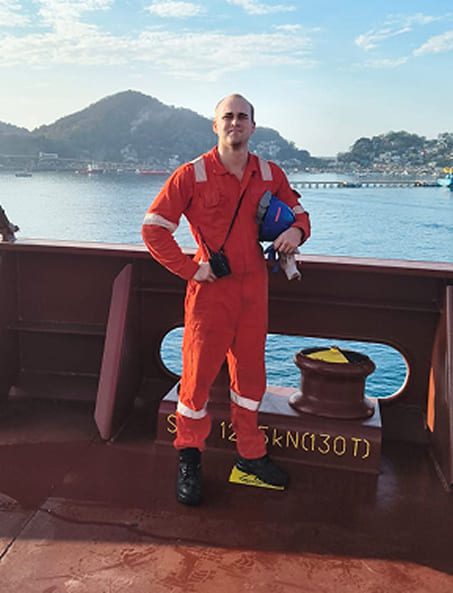
5. Safety is often spoken about as a core maritime value. As a cadet, when did you first begin to understand what safety culture really means in day-to-day shipboard life?
From my first day onboard, I noticed how seriously safety is taken at sea. Whether through drills, safety meetings, toolbox talks, permit-to work systems or PPE, safety is built into every operation onboard. It quickly made me realise how important preparation, communication and teamwork are in day-to-day operations at sea.
6. How did your own background help you adjust to a multinational crew and international vessel operations?
I think my background helped me adjust quickly to living and working with people from different nationalities and backgrounds. Onboard, I quickly learned that being respectful, open-minded and willing to learn goes a long way in an international shipping environment.
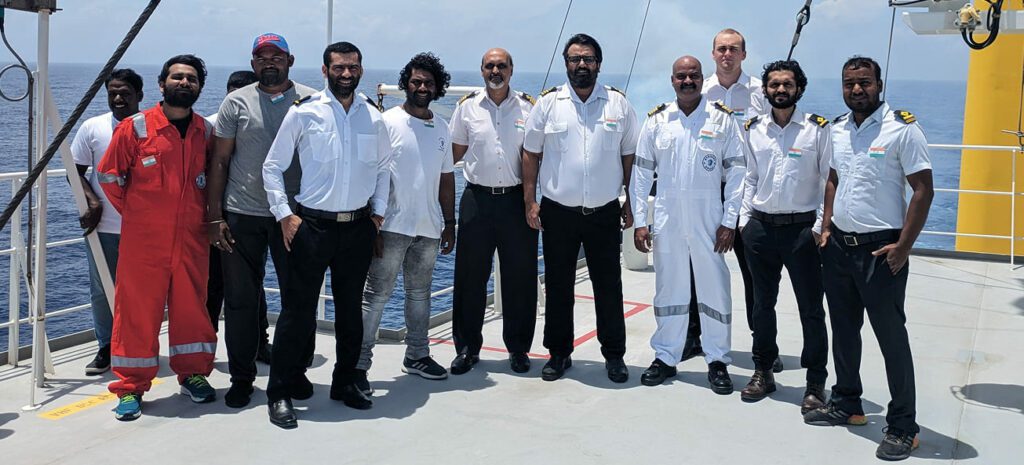
7. What has been the most challenging part of the cadetship, personally or professionally, and how did you work through it?
The most personally challenging part of my cadetship has been the long periods away from home while adjusting to life and work at sea. Over time, that experience has helped me become more independent and adaptable. Professionally, there is a lot to learn every day, so I have learned the importance of patience, asking questions and always being willing to improve.
8. Many young Australians may not fully understand the range of careers available in merchant shipping. What would you tell someone considering a cadetship today?
I would tell them that there are far more opportunities in the industry than most people realise. A cadetship gives you the chance to travel, work in a unique environment and build practical skills and responsibility. It can be challenging, but that is also what makes it such a rewarding experience.
9. How has the experience changed the way you see global trade, seafarers and the role shipping plays in everyday life?
This experience has completely changed the way I see global shipping. Before going to sea, I never fully understood how much world trade depends on ships and the people working onboard them. Being at sea has given me a much greater appreciation of the coordination, responsibility and teamwork involved in keeping global trade moving every day.
10. Looking ahead, what kind of maritime professional do you hope to become, and what support or exposure will help you get there?
Looking ahead, I hope to become a well-rounded and reliable deck officer who is confident on the bridge, dependable in operations and effective as part of a team. Right now, I am focused on building as much experience as possible, learning from those around me and continuing to develop my skills at sea. Exposure to different vessel types, operations and experienced deck officers will continue to help me grow as a maritime professional.
11. If you had to describe your cadetship in one sentence, what would you say?
My cadetship has been a rewarding experience that has taught me a great deal about seamanship, teamwork, responsibility and adapting to life at sea.
12. What is one moment onboard that made you think, “Yes, this is the career I want to build”?
One moment that confirmed this career was for me was approaching Singapore and being part of a bridge team navigating through the Singapore Strait and busy traffic en route to our terminal. Seeing the level of teamwork and communication on the bridge really stood out to me and made me realise that this was the kind of career I wanted to pursue.
Interested in a career at sea?
Explore opportunities for cadets, engineers and deck officers with Synergy Marine Group and learn more about professional development pathways across our global fleet.