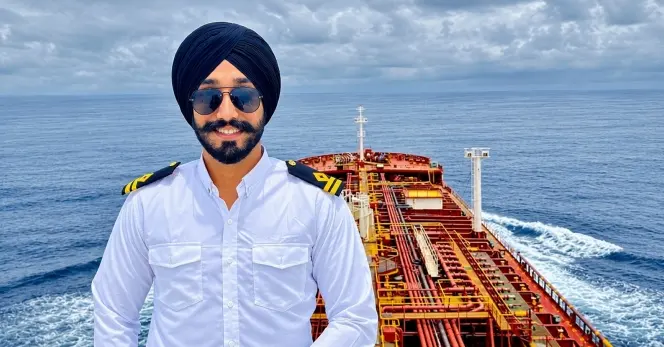
“As an officer, I try to remember where I started. I believe an officer should not only give instructions but also listen, guide and support the crew.”
For Second Officer Labhpreet Singh, these words come from experience.
Before becoming a deck officer, Labhpreet sailed as a rating. He carried books and study notes on board, studying whenever his duties allowed. Internet access at sea was limited at the time, and there were periods of financial difficulty. Finding opportunities to progress was not always straightforward.
“When I started as a Rating, I could see myself becoming an officer. I felt that I could also achieve it if I worked hard and kept learning.”
His practical experience, encouragement from senior officers and the support of his colleagues and family helped him pursue that ambition.
Labhpreet completed his Second Mate examinations at Warsash Maritime School in the United Kingdom. He joined Synergy Marine Group as a Third Officer and subsequently progressed to Second Officer. In 2025, he obtained his Chief Mate Certificate of Competency (CoC) after studying at South Shields Marine School in the UK.
Learning through experience
Having spent much of his career aboard oil and chemical tankers, Labhpreet credits senior officers, instructors and superintendents with helping him develop professionally.
He recalls how training, guidance and feedback, including during vessel audits, helped him recognise where he needed to improve and prepare for greater responsibilities.
His years as a rating continue to influence how he works with his colleagues today.
“My experience as a Rating taught me the importance of teamwork, respect and understanding the challenges faced by the crew,” he says.
Having experienced shipboard life in both rating and officer roles, Labhpreet understands the demands placed on the people he now helps supervise and train.
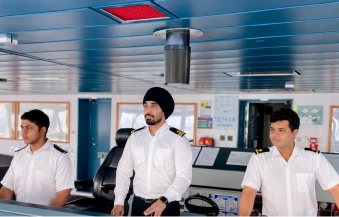
Creating pathways for progression
Labhpreet’s journey is particularly relevant to the maritime industry’s wider discussion about developing talent from within its existing workforce.
The BIMCO/ICS Seafarer Workforce Report 2026 identifies a global shortfall of 39,100 STCW-certified officers alongside a surplus of 56,890 ratings.
As Synergy’s Maneesh Pradhan discussed in a recent article published by the International Chamber of Shipping (ICS), the availability of experienced ratings does not automatically translate into a supply of qualified officers.
Progression requires approved training, sea service, formal qualifications and demonstrated competence. It also requires the development of leadership skills, professional judgement and the ability to assume greater responsibility.
At Synergy, the Skill Map supports this broader approach to professional development by helping identify training needs, assess competencies and inform career progression decisions.
For Labhpreet, the importance of having a clear career pathway is something he understands first-hand.
“I believe young seafarers need to see a clear path for growth. Good training, supportive seniors, promotion opportunities and a company that invests in its people can make a big difference.”
Looking ahead
Having obtained his Chief Mate CoC, Labhpreet is focused on gaining further operational experience. He is also interested in pursuing additional training in maritime auditing and management systems, including an ISM Lead Auditor course.
His longer-term ambition is equally clear.
“I would like to become a senior officer who is technically strong, makes good decisions and supports the people working with him.”
For Labhpreet, progressing from rating to officer remains his proudest professional achievement. The experience of getting there continues to shape the officer he wants to become.