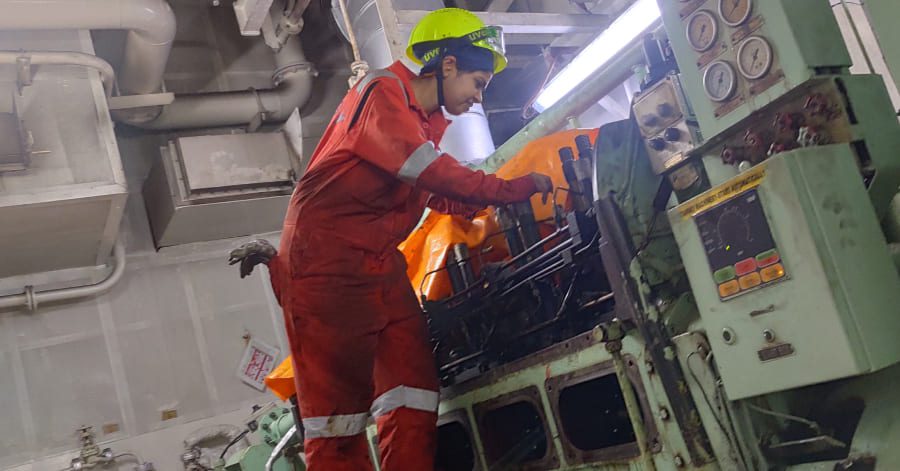
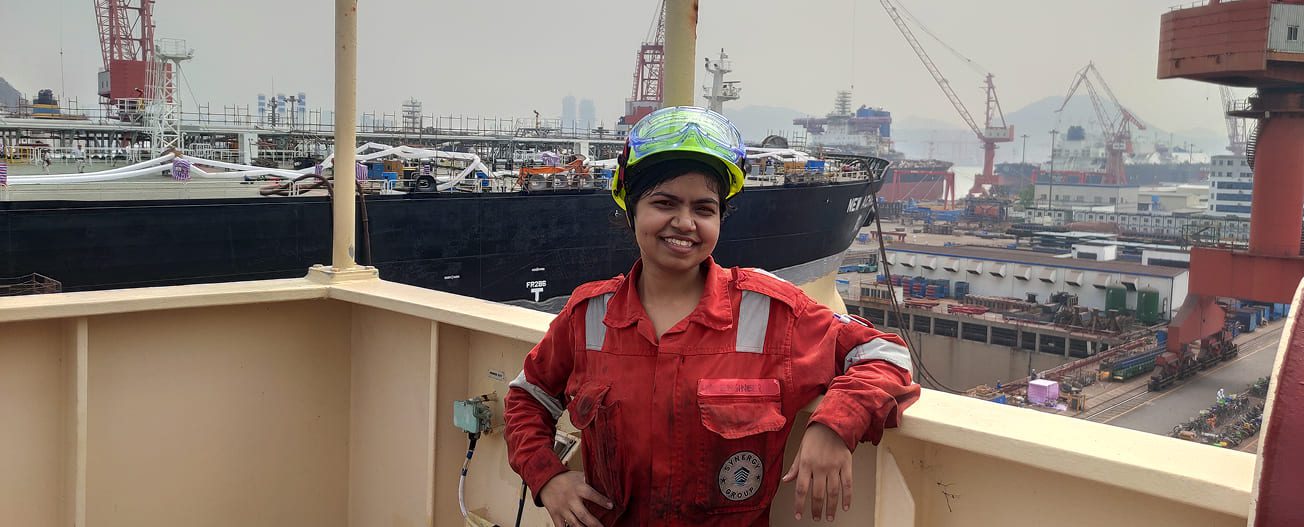
Aditee Singh is sailing as a Fourth Engineer with Synergy Marine Group, at a stage where early experience begins to translate into independent responsibility. Having moved beyond cadetship, her role now sits closer to the core of engine room operations, with defined ownership of equipment and day-to-day maintenance.
On board, her work involves monitoring systems, carrying out planned maintenance and responding to operational demands as they arise. It is a phase where judgement is shaped through practice, and where a deeper understanding of machinery and procedures becomes essential.
Her journey reflects the shift from learning under supervision to contributing with greater accountability, building the experience required to progress within marine engineering.
- What inspired you to pursue a career at sea, and how has that journey evolved over time?
I grew up in an environment where I was encouraged to think without limits. I was drawn to fields that offered something different, whether that was space, aviation or the sea. What stayed consistent was the interest in science and working with machines.When I joined for pre-sea training, I did not fully understand what the profession would demand. But I knew I wanted to pursue it. Over time, that uncertainty gave way to experience. The work has a way of shaping you. You learn by doing, by observing and by adapting to situations that are often new. That process is still ongoing.
2. What are the most important skills or habits you have developed at sea?
The way you organise your work becomes very important. Planning your day, keeping track of tasks and staying focused helps everything run smoothly. It also helps you stay clear-headed when things do not go as expected.At the same time, you learn to keep going even when situations are not easy. There are moments where you have to put aside distractions and focus on what needs to be done. Over time, that becomes part of how you approach both work and challenges more generally.
3. How would you describe your experience sailing with Synergy in terms of safety, teamwork and support?
I started my career with Synergy, so my experience has been within this system from the beginning. There is a clear focus on safety, supported by regular training and structured processes.What stands out just as much is how people work together on board. Everyone depends on each other, and there is an understanding that no one works in isolation. When that works well, it makes a real difference to both safety and day-to-day operations.
4. What does a typical day on board look like for you, and where does judgement play the biggest role?
The day begins early, with a toolbox meeting where we plan the work ahead. From there, it moves into engine room rounds, maintenance responsibilities and watchkeeping. The structure is consistent, which helps.
Where it becomes more demanding is when something unexpected happens. Alarms, equipment issues or changes in operating conditions require quick assessment and action. In those moments, you rely on your understanding of the system, the procedures and your own experience. Staying calm and thinking clearly is important.
5. Has any experience at sea had a lasting impact on you?
Living and working with people from different backgrounds has been one of the biggest learning experiences. Everyone brings their own way of thinking and working, and that can sometimes lead to differences.
Over time, I have learnt to pause before reacting, to listen and to try and understand where the other person is coming from. It changes how you work with people and how you approach situations more broadly.
6. How do you see technology and digitalisation shaping shipboard roles and careers?
The way work is carried out on board is changing. There is more reliance on systems, data and integrated controls. This means that instead of only focusing on physical tasks, there is more attention on monitoring systems and understanding what the data is telling you.
This also opens up different directions for a career. There are roles today that connect ship operations with data analysis and system management. At the same time, it means you have to keep learning and stay updated.
You can see similar changes in industries like mining and aviation, where technology has shifted the focus from manual work to oversight and decision-making.
7. What qualities are most important for seafarers today?
The ability to adjust to change is key. The industry does not stay the same for long, whether it is new systems, new regulations or different ways of working.
For me, it means keeping myself informed, following updates and taking training seriously. It is something you have to keep working on if you want to grow in this profession.
8. What gives you the greatest sense of fulfilment at sea?
There is a certain clarity in how life is structured on board. You know what your responsibilities are, and you focus on them fully while you are there. At the end of the day, there is satisfaction in knowing that your part of the work has been done properly.
Time at home feels different. It gives you space to reconnect, to rest and to focus on things outside work. That balance is something I value.
9. How have you seen the maritime workplace evolve in recent years?
There is a noticeable shift in how the workplace is opening up to people from different backgrounds. It is becoming more reflective of the wider world.
At the same time, there are still instances where people carry certain assumptions. Moving beyond that will take time, but the direction is clear. What matters in the end is how you perform and how you carry yourself at work.
10. What would you say to someone considering a career at sea?
It is important to understand what this life involves before choosing it. It is very different from working ashore. It requires commitment and the ability to handle changing situations.
If you are willing to put in the effort and are clear about why you want to do it, it can be very rewarding. It teaches you a lot, not just about the job, but about yourself.