Dual Fuel Vessel Management: Advancing Maritime Decarbonisation
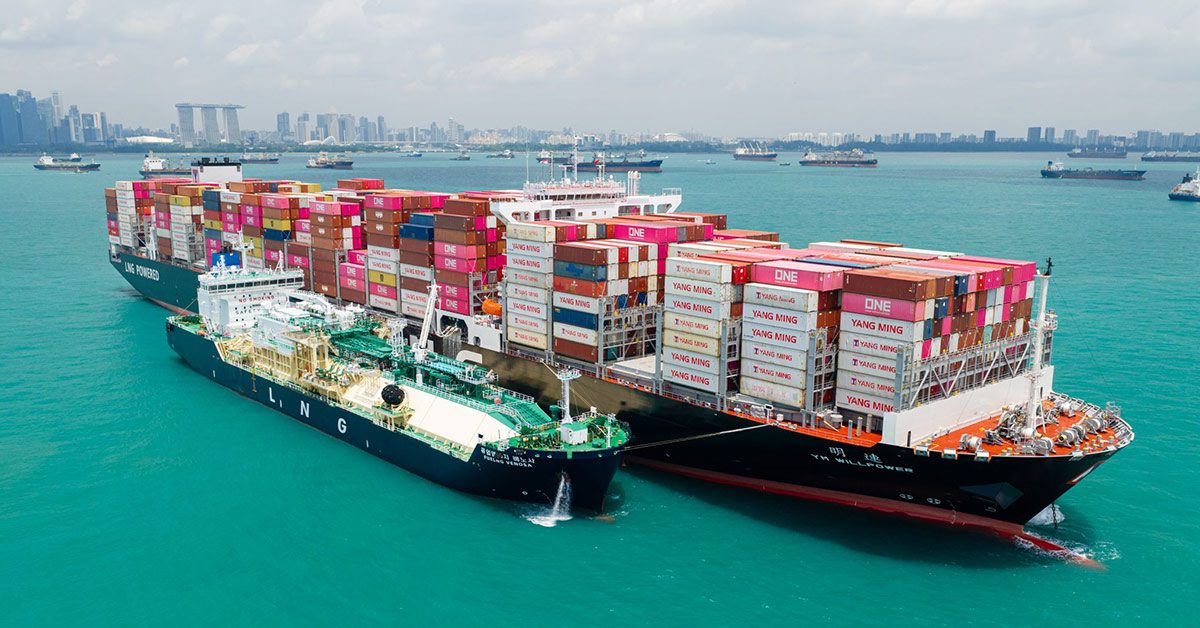
Table of Contents
Why Choose Synergy
Shipowners adopt dual-fuel technology for flexibility. They engage ship managers for stability.
Alternative fuels have changed the technical architecture of modern ships. More significantly, they have changed the operating model. Managing a dual-fuel vessel is no longer simply an engineering discipline. It demands close coordination between ship, shore, crew, charterer and fuel infrastructure throughout every voyage. The consequences of managing it poorly are not abstract. They show up in off-hire, in failed vetting, in emissions reporting discrepancies, in crew errors during bunkering, and in charter relationships that do not survive the first incident.
What owners are buying when they choose a ship manager for a dual-fuel vessel is not familiarity with the technology — yards deliver that, equipment manufacturers document it, classification societies certify it. What they are buying is the accumulated experience of running these vessels in commercial service, across real trading conditions, with real crew, in real ports, day after day.
Synergy Marine Group’s LNG dual-fuel experience began with a series of Aframax tankers, among them Pacific Emerald, the first LNG dual-fuel oil tanker to conduct an LNG bunkering operation in Singapore.
What followed was not a managed transition programme. It was the accumulation of operational knowledge that only comes from running complex vessels through the full range of conditions commercial shipping presents.
Synergy’s managed dual-fuel fleet spans LNG, LPG and methanol propulsion across container ships, tankers, bulk carriers and gas carriers. LNG bunkering operations have been conducted across it in Singapore, the US Gulf, Rotterdam, Gothenburg and other major supply hubs, and crew retention across these vessels is consistently high.
Technical management delivered through Synergy Ship Management, part of the wider Synergy Marine Group.
Speak to our dual-fuel team – marketing@synergygroup.sg
How We Manage Dual-Fuel Vessels
Managing the Operating Model, Not Just the Fuel System
A dual-fuel vessel introduces additional engineering layers – gas supply systems, cryogenic storage, boil-off gas management, automation architecture and safety redundancies. Each requires disciplined technical oversight. But the more consequential challenge is the operating model that surrounds them.
Charterers now include emissions performance in their commercial assessments. CII ratings influence vessel employability. EU ETS obligations require accurate monitoring and reporting from the voyage level upward. A bunkering operation that goes wrong does not just create a safety incident – it creates an off-hire event, a port authority record and a vetting concern that follows the vessel. Managing all of this requires the shore team, the vessel officers and the crewing function to operate as a single, coordinated system rather than as parallel workstreams that occasionally interact.
Synergy’s Remote Operations Optimisation Centre monitors vessel performance continuously across the managed fleet, drawing fuel consumption, emissions data and system performance into a single operating view through OceanEye. For dual fuel vessels, this monitoring is directly connected to the commercial and regulatory obligations the owner carries – CII performance, EU ETS reporting and charterer transparency requirements are tracked as part of daily management rather than assembled retrospectively. Shore teams work from the same operating picture as the Master and Chief Engineer. When a decision needs to be made – about fuel mode, about bunkering timing, about performance optimisation – it is made with the full context available.
Our Dual-Fuel Fleet
The Fleet in Service
Maersk Finisterre, the methanol dual fuel container vessel under Synergy technical management, illustrates what disciplined operating model governance looks like for a vessel type where fuel handling procedures, material compatibility requirements and safety protocols differ materially from LNG. Methanol’s operational characteristics require specific crew preparation, modified bunkering procedures and closer coordination between the vessel and shore team than conventional fuel operations demand. The governance framework Synergy applies to Maersk Finisterre was not assembled from first principles when the vessel entered management. It was developed through direct operational experience and applied from day one.
YM Willpower and YM Worthiness, two 15,500 TEU LNG dual fuel container vessels built for Yang Ming Marine Transport Corporation at Hyundai Heavy Industries and operating on Asia-Mediterranean liner services, present a different set of demands – high-frequency bunkering at major ports, sustained long-haul operations and the continuous emissions and performance monitoring that liner charterers expect as standard. Managing them to the reliability standards a liner network requires means the technical management, crewing and monitoring functions must work without gaps between them.
SG Horizon, a Japan-flagged LNG dual fuel Newcastlemax bulk carrier from Namura Shipyard, extends the Group’s operational reference into dry bulk. Mirai, a fully refrigerated carrier capable of operating on LPG for propulsion and can carry LPG, ammonia and VCM as cargo. Arctic Tern adds chemical carrier context. The breadth of the fleet is not incidental – it is the source of the operational knowledge the ship management function brings to each new assignment.
MFM NICOLE, a 39,200 m³ fully refrigerated LPG carrier owned by Asian Shipping S.A., has been under Synergy’s technical management through Synergy Maritime Gas Pte. Ltd. since 21 July 2026. Her MAN B&W ME-LGIP main engine can operate on LPG or conventional fuel oil. Three IMO Type A cargo tanks accommodate LPG and anhydrous ammonia, combining dual-fuel propulsion with versatility in the cargoes she can carry.
LNG Bunkering Expertise
Bunkering as an Operational Discipline
An LNG bunkering operation requires preparation that begins long before the bunker vessel arrives. Port authority coordination, compatibility assessments between the receiving vessel and the bunker supplier, pre-transfer safety meetings, zone establishment and post-transfer verification — each element must be managed reliably across ports with different regulatory frameworks, infrastructure standards and operational cultures.
The experience accumulated across LNG bunkering operations in many ports and supply hubs has produced a structured operational approach that functions consistently regardless of the port or fuel supplier involved. That consistency is what protects a vessel’s schedule and a charterer’s confidence in the operator.
Crew Training & Competence
Crew Competence and the Human Operating Model
The technical architecture of a dual fuel vessel can be documented in a manual. The operational judgement required to run it safely cannot. A crew member who has studied LNG fuel systems in a classroom understands the procedure. A crew member who has spent extended time aboard an operating dual fuel vessel understands the difference between what the procedure says and what the system actually does under varying conditions at sea.
Synergy Mariners, the Group’s dedicated crewing and training capability, ensures that the crew joining a dual fuel vessel are prepared for the specific demands of the vessel type before they step on board — through training at facilities operating jointly with MOL, with ISO 9001:2015 certification and DNV and Class NK approved courses including LNG bunkering simulations, fuel gas supply system operations and dual fuel engine room modelling. Onboard mentoring and shore-based technical support during the critical early period of an assignment reinforce classroom and simulator preparation with operational experience.
High crew retention across the dual-fuel fleet reflects what that preparation produces: crews who are confident in the vessel, familiar with its systems and who return to it.
Future Fuel Readiness
The Next Twenty Years
Synergy’s operating experience spans LNG, LPG and methanol dual-fuel vessels. As further fuel options enter service, owners need technical management teams that can apply this experience to new systems and operating requirements. What owners are ultimately buying when they select a ship manager for their dual fuel programme is not expertise in a specific fuel type. It is the demonstrated capacity to manage technically complex, operationally demanding vessels safely and commercially – and to extend that capacity to new fuel types as they enter service.
Synergy’s technical teams have conducted HAZID and HAZOP studies for future energy sources including methanol, hydrogen and ammonia. Mirai’s operational capability across she uses LPG for propulsion and can carry LPG, ammonia and VCM as cargo. Monax and Iron Phoenix have been involved in biofuel and future fuel trials that extend the Group’s practical understanding of how next-generation fuels perform in commercial service.
The energy transition is a managed progression that will continue to introduce new technical requirements, new regulatory frameworks and new operational demands. The ship manager’s role in that progression is to make each step operationally reliable rather than simply technically possible.
Whether you are commissioning a dual fuel newbuilding, transitioning an existing vessel to alternative fuel operations or planning a fleet programme that extends across the next decade of regulatory change, the experience your ship manager brings to the assignment will determine how reliably it is executed.
Synergy Marine Group manages dual-fuel vessels in commercial service across fuel types, vessel segments and trading conditions that reflect what sustained dual-fuel operations actually require.
Contact our dual fuel team: marketing@synergygroup.sg
FAQs
Frequently Asked Questions
Which types of dual-fuel vessels does Synergy manage?
Synergy provides technical management for dual-fuel vessels across gas carriers, container ships, tankers and bulk carriers. Our operating experience spans LNG, LPG and methanol propulsion, supported by vessel-specific crew preparation, maintenance planning and shore-based technical expertise.
How did Synergy's LNG dual-fuel experience begin?
With a series of LNG dual-fuel Aframax tankers, among them Pacific Emerald, the first LNG dual-fuel oil tanker to conduct an LNG bunkering operation in Singapore.
Which methanol dual fuel vessels does Synergy manage?
Synergy provides technical management for Maersk Finisterre, a methanol dual fuel container vessel, with further methanol dual fuel vessels in the confirmed management pipeline.
What LNG bunkering experience does Synergy have?
LNG bunkering operations have been conducted across the managed dual-fuel fleet in Singapore, the US Gulf, Rotterdam, Gothenburg and other major supply hubs.
How does Synergy train crew for dual fuel operations?
Through Synergy Mariners, the Group’s dedicated crewing and training capability, crew programmes include LNG bunkering simulations, fuel gas supply system operations, emergency response and dual fuel engine room modelling – at facilities operating jointly with MOL, with ISO 9001:2015 certification and DNV and Class NK approved courses. Training is reinforced onboard through structured mentoring and shore-based technical support.
Can Synergy-managed gas carriers transport ammonia?
Yes. MFM NICOLE’s three IMO Type A cargo tanks can accommodate anhydrous ammonia as well as LPG. Her main engine operates on LPG or conventional fuel oil. The ability to transport ammonia as cargo is separate from the ability to use it for propulsion.
Does Synergy support owners through the dual fuel newbuilding process?
Yes. Synergy Marine Projects provides newbuilding supervision for dual fuel vessels, including lifecycle specification review, gas trials and operational handover. For owners placing vessels into management following delivery, the project and technical management teams work together throughout the construction process.