

For shipping companies trading with Europe, the EU Emissions Trading System is no longer a future consideration or a phased experiment. From 2026, it becomes a fully embedded commercial reality.
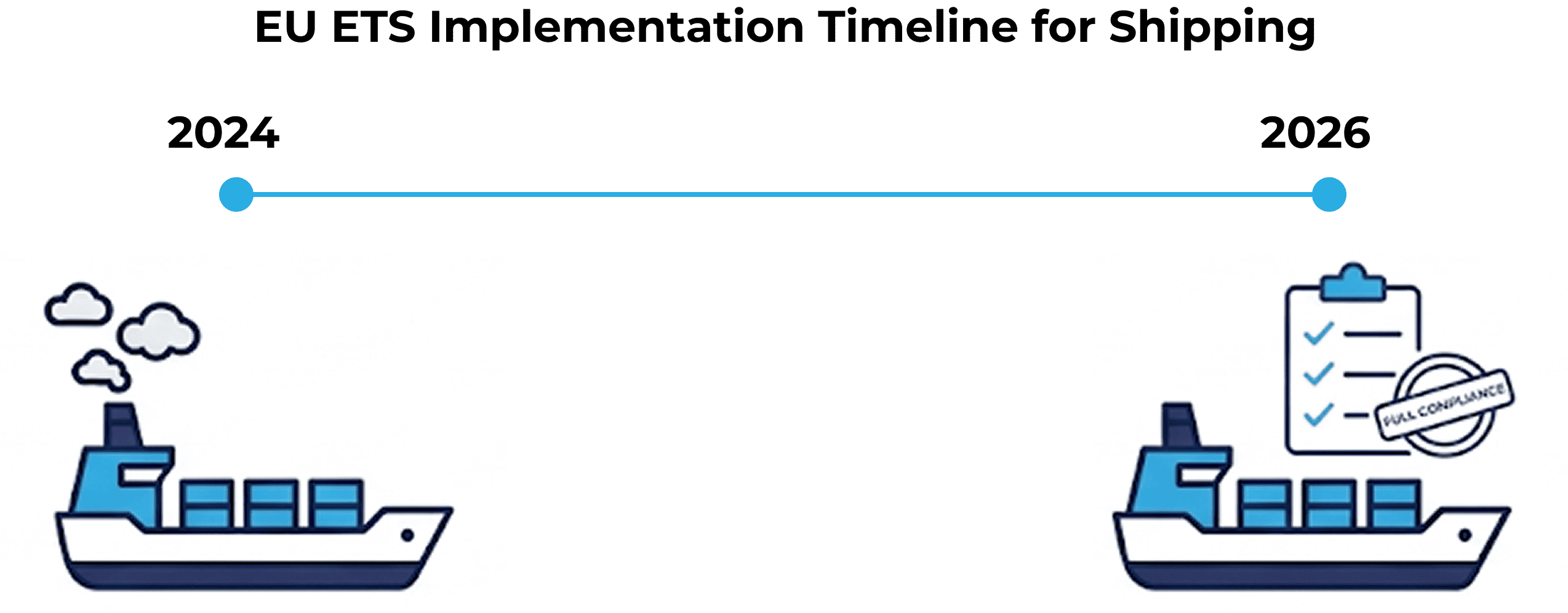
What began as a gradual regulatory extension in 2024 has now reached its endpoint. Emissions are fully priced, allowances must be surrendered in full, and the cost of carbon is no longer theoretical. For shipowners, this changes the nature of everyday decisions – from voyage economics and charterparty clauses to fleet planning and operational discipline.
This article sets out, in plain terms, what EU ETS means for shipping in 2026, where the real pressures lie, and how owners can approach compliance with clarity rather than uncertainty.
EU ETS for Shipping – at a Glance
From 2026, shipping companies operating vessels of 5,000 gross tonnage and above on voyages involving EU or EEA ports must surrender EU ETS allowances covering 100 percent of applicable greenhouse gas emissions. This includes emissions on voyages between EU ports, half of emissions on voyages between EU and non-EU ports, and emissions while vessels are alongside.
Compliance is mandatory, cost-bearing and enforced through verified reporting and regulatory oversight.
What the EU Emissions Trading System Means for Shipping
At its core, the EU ETS places a price on greenhouse gas emissions. The system operates on a simple principle: emissions are capped, allowances are issued, and companies must surrender allowances equivalent to their verified emissions.
For shipping, this marks a structural change. Emissions are no longer only a matter of reporting or disclosure. They now carry a direct financial consequence that must be managed year after year.
Unlike fuel price volatility, which owners are accustomed to navigating, carbon pricing introduces a new variable that is regulatory in origin but commercial in impact. The ability to understand, forecast and manage that exposure is quickly becoming a differentiator.
Which Ships and Voyages Are Covered
The EU ETS applies to cargo and passenger vessels of 5,000 gross tonnage and above, regardless of flag, when they trade with EU or EEA ports.
In practical terms, this means:
- All emissions from voyages between EU or EEA ports are covered
- Fifty percent of emissions from voyages between EU or EEA ports and non-EU ports are covered
- Emissions generated while vessels are at berth in EU or EEA ports are included
For most internationally trading owners, this captures a substantial portion of annual operating profiles, even if Europe is not the primary trade lane.
What Must Be Reported and Surrendered
EU ETS compliance for shipping is built on the existing EU MRV framework, which many owners are already familiar with. What has changed is the consequence of that data.
Emissions must be:

Monitored in accordance with an approved monitoring plan

Reported annually at ship and company level

Independently verified
Based on the verified emissions, shipping companies must purchase and surrender EU ETS allowances. From 2026 onwards, this obligation applies to the full emissions scope, not a phased percentage.
Allowances corresponding to the previous calendar year’s emissions must be surrendered by the regulatory deadline each year.
The Cost Dimension Owners Are Now Confronting
By 2026, the EU ETS has moved decisively from a compliance exercise to a cost centre.
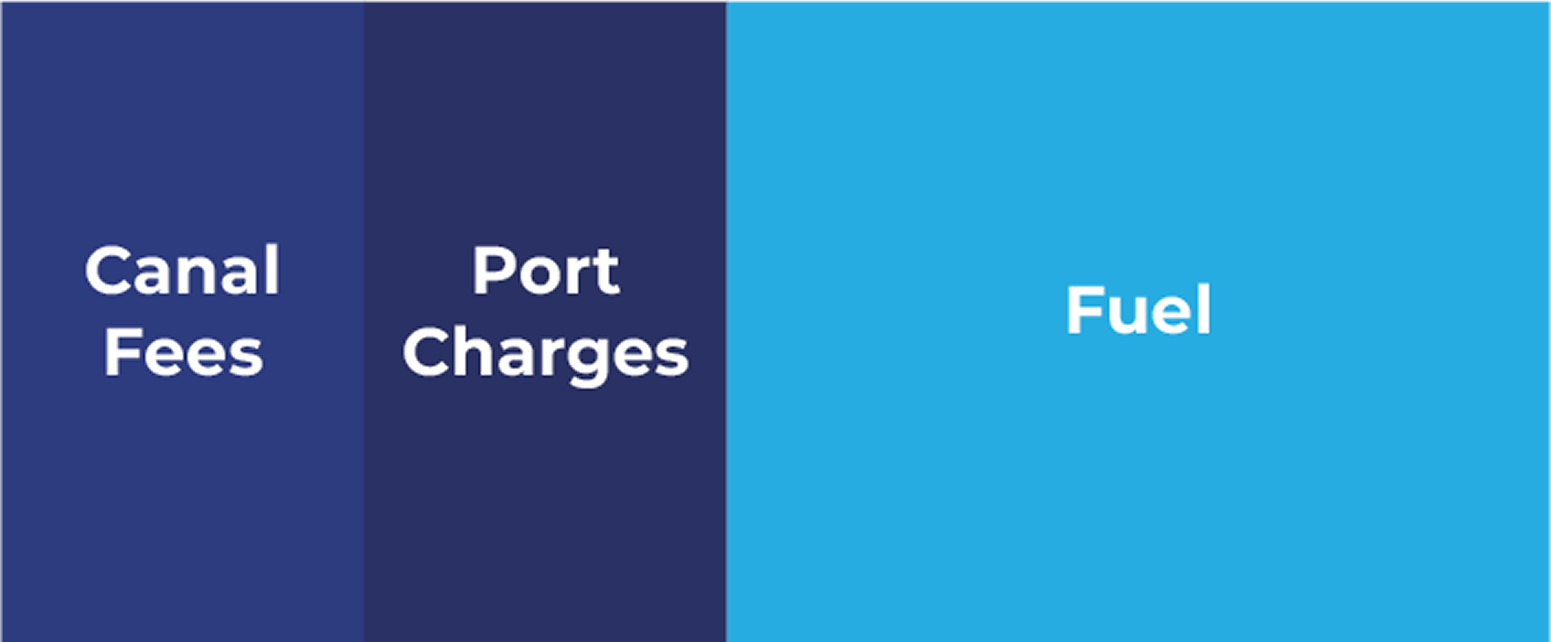
Carbon allowance prices fluctuate, but the structural impact is clear: emissions now have a direct and sometimes material effect on voyage economics. On certain routes, EU ETS costs can rival or exceed traditional port or canal charges.
Traditional Voyage Costs
Voyage Costs with EU ETS

For owners, this raises several practical questions:
- How predictable are our annual EU ETS costs?
- How are these costs allocated under existing charter arrangements?
- How do we avoid surprises at year-end?
There is no single answer, but what is evident is that reactive compliance is no longer sufficient. Owners who treat EU ETS as an afterthought are likely to experience cost volatility and commercial friction.
Where Owners Are Experiencing the Greatest Challenges
Most owners do not struggle with the concept of EU ETS. The challenges arise in execution.
Data accuracy and consistency remain a concern, particularly across mixed fleets and different trading patterns. Carbon markets introduce price exposure that is unfamiliar to many shipping organisations. Contractual arrangements do not always reflect the reality of emissions liability, leading to disputes or renegotiation.
Perhaps most importantly, EU ETS sits alongside other regulatory frameworks – FuelEU Maritime, IMO measures, regional reporting obligations – creating an increasingly dense compliance environment. The risk is not non-compliance through neglect, but misalignment through fragmentation.
Approaching EU ETS with Practical Confidence
Owners who are navigating EU ETS most effectively tend to adopt a few consistent principles.
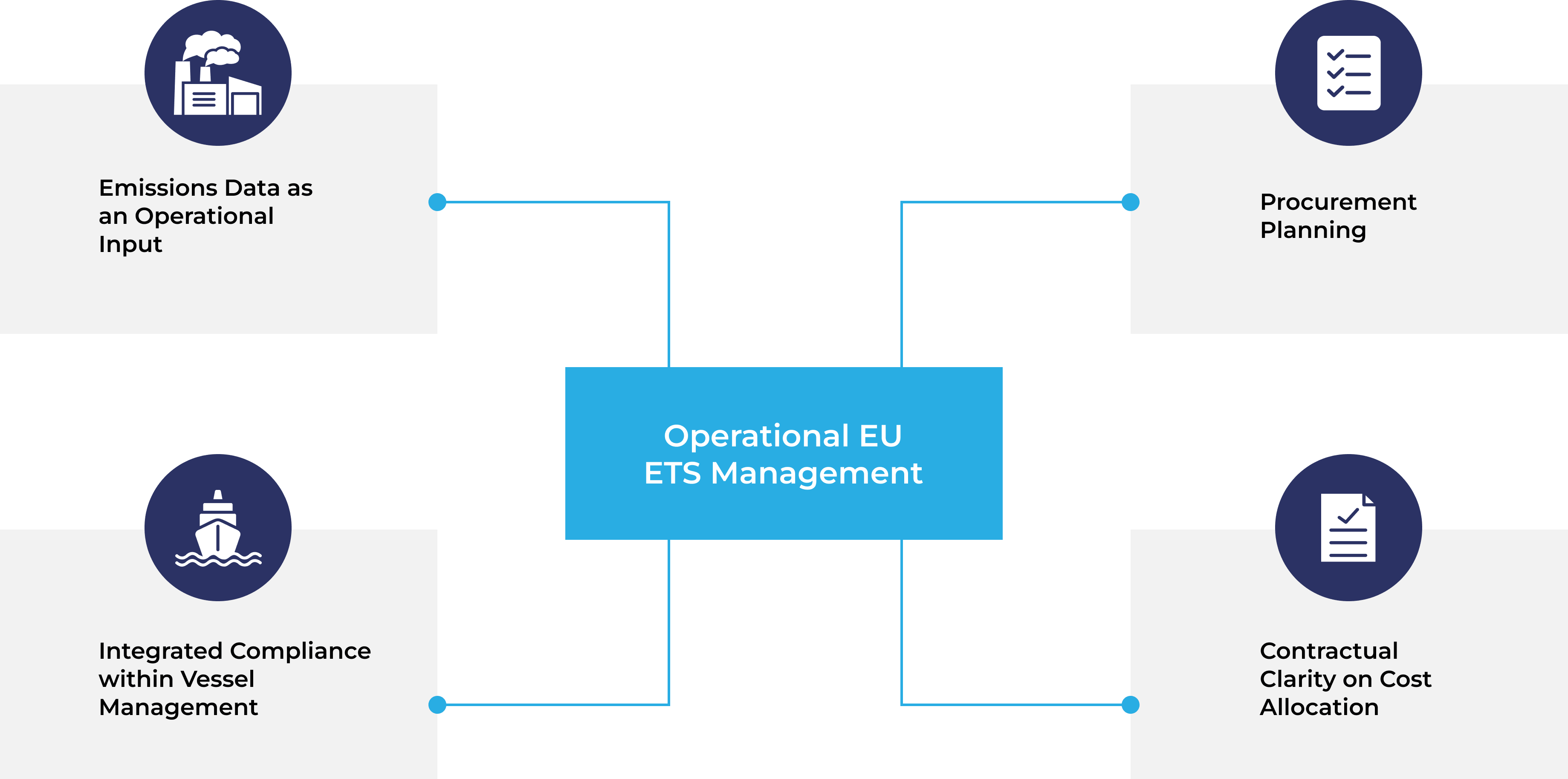
They treat emissions data as an operational input, not a reporting output. They plan allowance procurement deliberately rather than reactively. They ensure contractual clarity on cost allocation. And they integrate regulatory compliance into everyday vessel management rather than isolating it within a single department.
Above all, they recognise that EU ETS is not about perfection. It is about predictability, transparency and control.
How Synergy Marine Group Supports EU ETS Compliance
At Synergy, EU ETS compliance is approached as part of day-to-day ship management rather than as a parallel regulatory exercise.
Our role is to ensure emissions data is accurate, verified and aligned with regulatory expectations, while supporting owners in understanding what that data means commercially. Compliance processes are integrated into fleet management, reporting cycles and operational decision-making, reducing fragmentation and uncertainty.
The objective is straightforward: to allow owners to meet their EU ETS obligations with confidence,
without diverting focus from safe, efficient vessel operations.
Conclusion
By 2026, EU ETS has become part of the operating landscape for any shipping company trading with Europe. The question is no longer whether it applies, but how well it is managed.
Owners who approach EU ETS with structure, clarity and experienced support are better placed to absorb its costs, explain its impact and maintain commercial stability. Those who treat it as a last-minute obligation risk disruption.
In a market already shaped by volatility, disciplined EU ETS compliance is increasingly a marker of operational maturity.
With experienced ship management support, owners can approach EU ETS obligations with greater clarity, control and confidence.
Frequently Asked Questions
What is EU ETS and why does it apply to shipping companies?
EU ETS is the European Union’s carbon pricing mechanism. Shipping has been included to ensure emissions from vessels trading with Europe are measured, priced and reduced in line with the EU’s climate objectives.
Which ships are covered under EU ETS regulations?
Cargo and passenger vessels of 5,000 gross tonnage and above calling at EU or EEA ports are covered, regardless of flag.
What emissions are included under EU ETS for shipping?
EU ETS covers carbon dioxide emissions and, from 2026, also methane and nitrous oxide, based on fuel consumption during applicable voyage segments and time at berth.
What are the main compliance requirements for shipping companies?
Shipping companies must monitor and verify emissions, submit annual reports, purchase EU ETS allowances and surrender allowances equal to their verified emissions.
When must EU ETS allowances be surrendered?
Allowances corresponding to the previous year’s emissions must be surrendered by the annual regulatory deadline, with full coverage required from 2026 onwards.
What happens if a company does not comply?
Non-compliance can result in financial penalties, public disclosure and enforcement action by EU authorities, including potential restrictions on port access in severe cases.
How can shipping companies manage EU ETS compliance costs?
Costs are best managed through accurate emissions data, structured allowance purchasing, operational efficiency and clear contractual allocation of carbon costs.
How does a ship manager support EU ETS compliance?
A ship manager supports compliance by integrating emissions monitoring, reporting and regulatory alignment into everyday vessel operations and fleet management processes.
