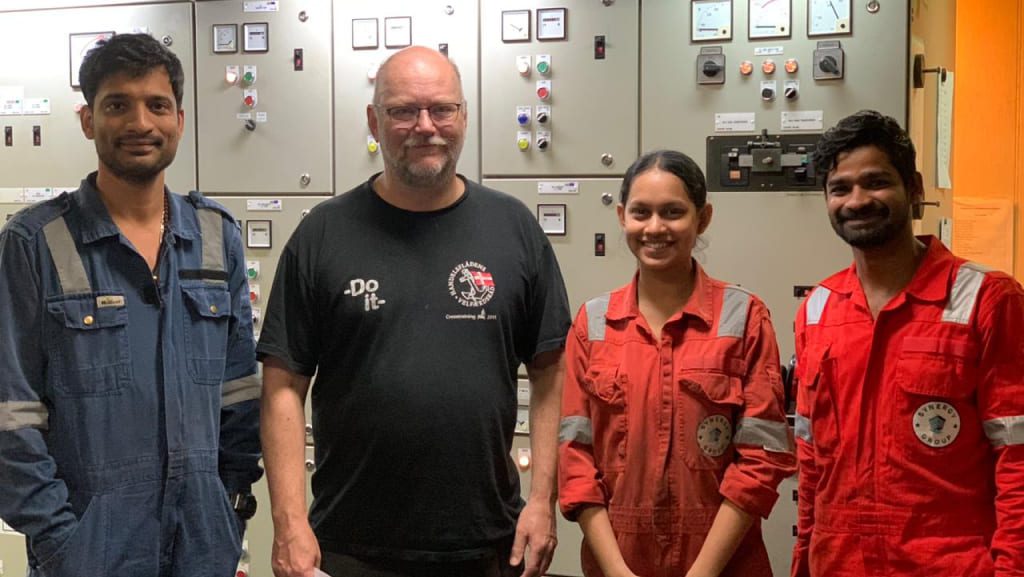
Nisha Mohanty is at the early stages of her career as a marine engineer, currently sailing as a Trainee Marine Engineer with Synergy. Having completed her second vessel assignment, she is part of a cohort entering the profession with a clear sense of intent and a willingness to learn in real operating conditions. Her journey so far reflects less about milestones and more about adjustment, observation and steady progression. The engine room, with its pace and precision, is where that transition is now taking shape.
1. What drew you to a career at sea, and how has that decision evolved over time?
I was always drawn to careers that demanded discipline and a sense of purpose. While I could not pursue the armed forces, I found something similar in the Merchant Navy. The idea of working at sea and being part of a profession that operates beyond conventional boundaries stayed with me.
Choosing this path required conviction, especially in the early stages. Pre-sea training played a significant role in shaping that decision. It gave me the technical foundation and the confidence to move forward. Being the only female engineer cadet in my batch was challenging at first, but over time it became a defining part of my journey. The experience helped me adapt, stay focused and grow into the role.
2. What habits or skills have stayed with you from your time on board so far?
Consistency is the one habit that has stayed with me. At sea, you learn to approach each day with focus, regardless of conditions.
Adaptability is equally important. Situations change quickly, and you need to respond without hesitation. Over time, I have also learned to trust my training and take responsibility for my work, even as a trainee. These are qualities that continue to shape how I approach my role.
3. How has your experience shaped your understanding of safety and teamwork?
What stands out is how safety is approached in practice. It is not treated as a formality, but as something that guides decisions and actions at every level.
On board, there is a strong sense of teamwork. Senior officers are approachable and willing to guide, and there is openness in how people communicate. As a trainee, that creates an environment where you can learn with confidence and contribute meaningfully.
4. What does a typical day look like for you on board?
My day usually begins in the engine room, where I assist with maintenance, monitor machinery and support routine operations. The role requires constant attention, particularly during watchkeeping and troubleshooting. Much of my learning comes from observing experienced engineers and understanding how systems behave in real conditions. Even routine tasks require care, as they contribute to the overall safety and efficiency of the vessel.
5. Has there been a moment at sea that has stayed with you?
During my first vessel, I received news of my grandfather’s passing. Being away from home at that time was difficult. It was a moment that made me understand the realities of life at sea. You learn to manage personal emotions while continuing with your responsibilities. The support I received from senior officers during that period made a lasting impression on me.
6. How do you see technology shaping your role going forward?
Technology is becoming an integral part of shipboard operations. With better monitoring systems and access to data, decisions can be made more efficiently. For marine engineers, this means developing both technical and digital awareness. The role is evolving, and those who adapt to these changes will be better prepared for future responsibilities.

7. What qualities do you think are essential for a seafarer today?
Resilience and adaptability are essential. Life at sea can be demanding, and you need to manage both the work and the environment over long periods. I try to maintain balance by staying engaged outside of work.
Activities such as sketching, spending time with colleagues or simply taking a moment to step away from routine help maintain focus over time.


8. What gives you a sense of purpose at sea?
It comes from knowing that I am progressing in a field I chose with intent. Each day brings new learning, and that sense of development is important.
While time ashore provides comfort and connection with family, it is at sea that I feel I am building my professional identity.
9. Have you noticed changes in how inclusive the maritime workplace has become?
There has been a noticeable shift towards a more inclusive and professional environment. There is greater emphasis on capability and contribution.
From my experience, I have felt supported and treated as part of the team. Continued progress will come from maintaining this focus on merit and opportunity.
10. What would you say to someone considering a career at sea?
It is a demanding path, but one that offers a strong sense of direction and growth.
If there is uncertainty, I would say that most growth comes from stepping into unfamiliar situations. With the right mindset, the experience can be both rewarding and defining.
Interested in a career at sea?
Explore opportunities for cadets, engineers and deck officers with Synergy Marine Group and learn more about professional development pathways across our global fleet.