Ship Management, Sharpened by Intelligence
At Synergy Marine Group, our people run the ships. Our systems sharpen the decisions.
The way ships are managed is evolving. Across more than 700 vessels under full technical management, close to 44 million DWT and operations spanning over 500 ports, intelligence has become a co-pilot to the experience of our masters, engineers and shore teams. It does not replace judgement. It strengthens it, by bringing greater clarity and consistency to the decisions taken every day.
Ship management remains, at heart, a people business. Our work is to make those people sharper, faster and better supported.
The Complexity Owners are Managing
Shipowners today are dealing with increasing complexity.

Information sits across many systems, vessels & managers, and is rarely connected in a way that supports timely decisions. The challenge is no longer access to data. It is the ability to act on it consistently, at the right time, across a global fleet.
How We Work
Managing over 700 vessels that called over 500 ports in 2025 means that the margin for inconsistency is narrow. A decision taken without the right information, on maintenance, on fuel, on compliance, carries consequences that compound quickly across a global fleet.
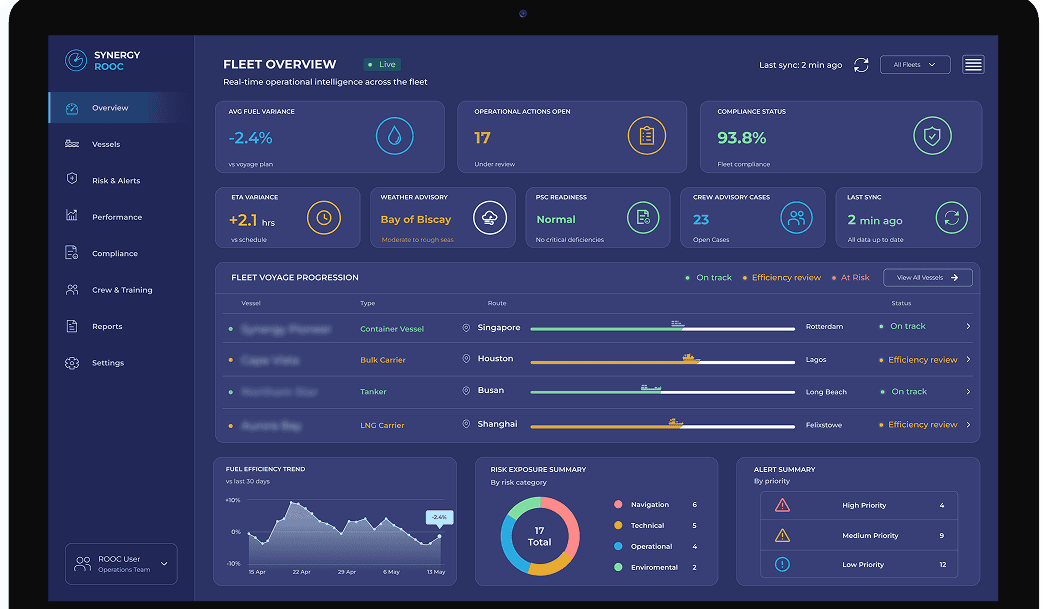
Our approach is to close that gap at the point where it matters: the decision itself. Performance data, operational status and emerging risk signals are drawn together into a single, structured view of the fleet. Shore teams and vessel personnel work from the same picture. Interventions happen earlier. Follow-through is more consistent.
We work within the systems and reporting practices already in place on each vessel. Where gaps exist, we close them. Where existing strengths can be built upon, we do that. This is what allows the model to operate across mixed fleets — tankers, bulkers, container ships, gas carriers — without imposing a uniform operating template that does not fit the reality of each ship.
The same logic applies to inspection readiness and equipment behaviour.
By drawing on patterns across vessel histories, audit records and inspection outcomes, teams are better positioned to anticipate issues rather than respond to them. Machinery trends are monitored over time. Risks surface before they become unplanned events.
For the people on board, the intent is straightforward. Technology must assist, not overwhelm. Crews receive the information they need, when they need it, in a form they can act on.

Intelligence In Practice
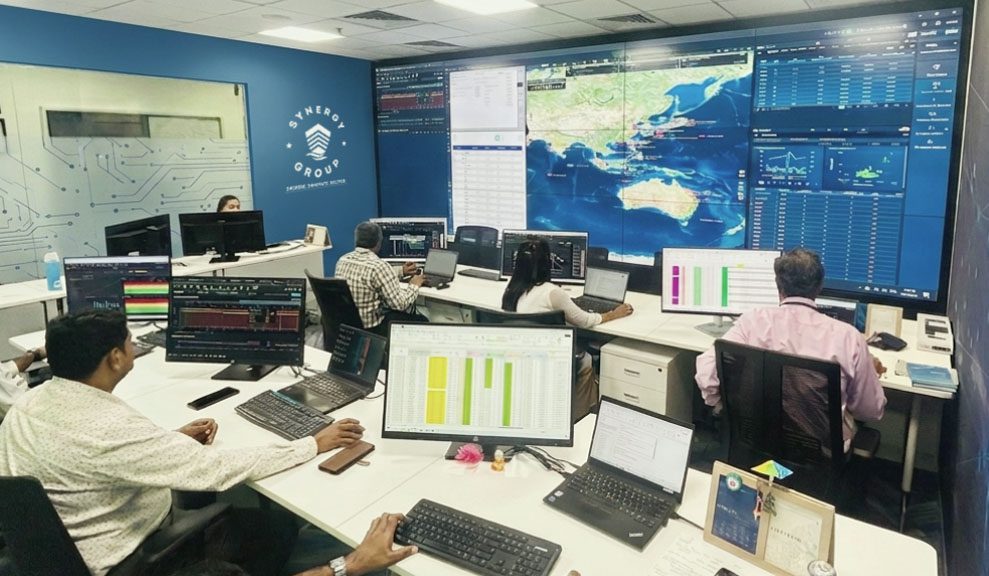
Our Remote Operations Optimisation Centre is the operational intelligence layer across the fleet. Through capabilities including Ocean Eye, vessel data, performance trends and risk signals are brought into a single shared view – monitored continuously, interpreted by experienced shore teams and acted upon in coordination with the master, chief engineer and superintendent.
The role of this layer is specific. It removes noise. It surfaces what matters. And it gives our people a sharper basis on which to act, without removing the judgement that only experience can provide.
In a fleet of this scale, the value of that is not theoretical. A consistent operational standard cannot be maintained across hundreds of vessels through reporting cycles and periodic inspections alone. It requires a layer of continuous visibility, one that flags deviation early, supports timely decisions and allows shore teams to engage with vessel performance as it unfolds rather than after the fact.
The judgement remains with the master, the chief engineer, the superintendent and the shore team. Ocean Eye is not a standalone product. It is part of how we manage ships.
What This Means For Shipowners
The clearest value of how we operate is in the quality of decisions taken every day on behalf of owners. This shows up in fewer surprises, more reliable vessel performance, stronger fuel and emissions outcomes and a steadier compliance posture across a global fleet.
Better-informed crews respond more confidently when conditions change. A single, structured view of the fleet means owners get the clarity they need without having to navigate complexity. As fleets grow, the operating standards travel with them.
The data and systems behind this are governed carefully. Access is controlled, information is protected and the right people see the right information at the right time.

Built For What Comes Next
Owners are not standing still. Regulation is tightening, expectations are rising and the operating environment will continue to become more complex.

Decisions That Build Trust
At its core, this is about the quality of the decisions we take on behalf of owners every day. By connecting information with experience, we act greater clarity, respond more quickly and operate the fleet with consistency.
- In an environment where safety, compliance and performance are not negotiable, that consistency is what builds trust over time
Frequently Asked Questions
How is intelligence used in ship management at Synergy?
We use connected data and analytics to support the decisions taken on board and ashore. Intelligence helps surface what matters across a large and complex fleet, while operational control stays with our shipboard and shore teams.
Where does AI and analytics fit in?
AI and analytics work in the background, identifying patterns and surfacing risks across large volumes of operational data. They are tools for our people, not a replacement for them.
How does this improve vessel performance?
By giving teams clearer visibility into fuel use, equipment condition and voyage conditions, and by supporting more timely intervention when something needs attention.
Does this change the role of the crew or our managers?
No. The intent is to support human judgement with sharper information, not to displace it.
What is Ocean Eye?
Ocean Eye brings vessel data, performance trends and risk indicators into a single operational view. It is part of how we run ships, embedded into how onboard and shore teams make decisions.
Does this work with the systems already on our vessels?
Yes. Our approach is designed to integrate with existing systems and reporting practices without disrupting operations.
How does this improve safety?
By identifying potential risks earlier and providing timely, relevant guidance to those best placed to act on it.
What visibility do shipowners get?
A clear, structured view of fleet performance with the reasoning behind it. Owners see what is happening, why it is happening and what is being done about it.
How is data security managed?
Data access is governed and controlled. Systems are designed to ensure that the right information reaches the right people at the right time.
How does this approach scale across a larger fleet?
The operating standards travel with the model. As fleets grow, consistency is maintained.
Do you have more questions?
We provide end-to-end ship management solutions built to enhance opertional efficiency, compliance and performance across global fleets.